

Want to give the gift of reading or writing? We have you covered. First, we have gift certificates good for any our services, available in any dollar amount. If you want to truly encourage the writer in your life—or give a gift to yourself, we are offering 10% off the face value of all gift certificates ordered by December 25.
If you or your loved one are more inclined towards reading, we have a selection of books by our Inspiration for Writers family for your enjoyment.
First up is Sandy Tritt, the founder and CEO of Inspiration for Writers, Inc. Although she normally writes fiction, her two most recent books are nonfiction. Her selections include a book for the writer in your life and one for the reader.

The PLAIN ENGLISH Writer's Workbook explains writing concepts in simple terms. It's written for fiction and memoir writers of all levels, from beginners to previously published. This workbook includes nine worksheets with detailed instructions to help you plot, create memorable characters, and edit your own work like a pro. Throughout the workbook, generous samples are given to show the right and wrong way to perform various techniques. EVERY WRITER NEEDS THIS BOOK.
 LAUNDRY TO LOVE -- Everything I Know about Life. When Sandy's oldest daughter was nearing high school graduation, Sandy suffered a major panic attack. Had she taught her daughter everything she needed to know? Had she shared the family recipes? Did her daughter understand the ethics she wanted to pass along? Sandy made notes all the things her daughters would need to know, then organized them by topic. As she cooked, she measured the pinches and pours and created recipes. Described as a marriage of Robert Fulghum and Martha Stewart, Laundry to Love gives practical hints, creative solutions, and unique outlooks on life (as well as 66 favorite family recipes)—a handbook for young women and men as they step out on their own. Perfect as a graduation or wedding gift, this book is also excellent for anyone who enjoys a fresh perspective sprinkled with a little humor. Laundry to Love is the life instruction book you didn't get. Until now.
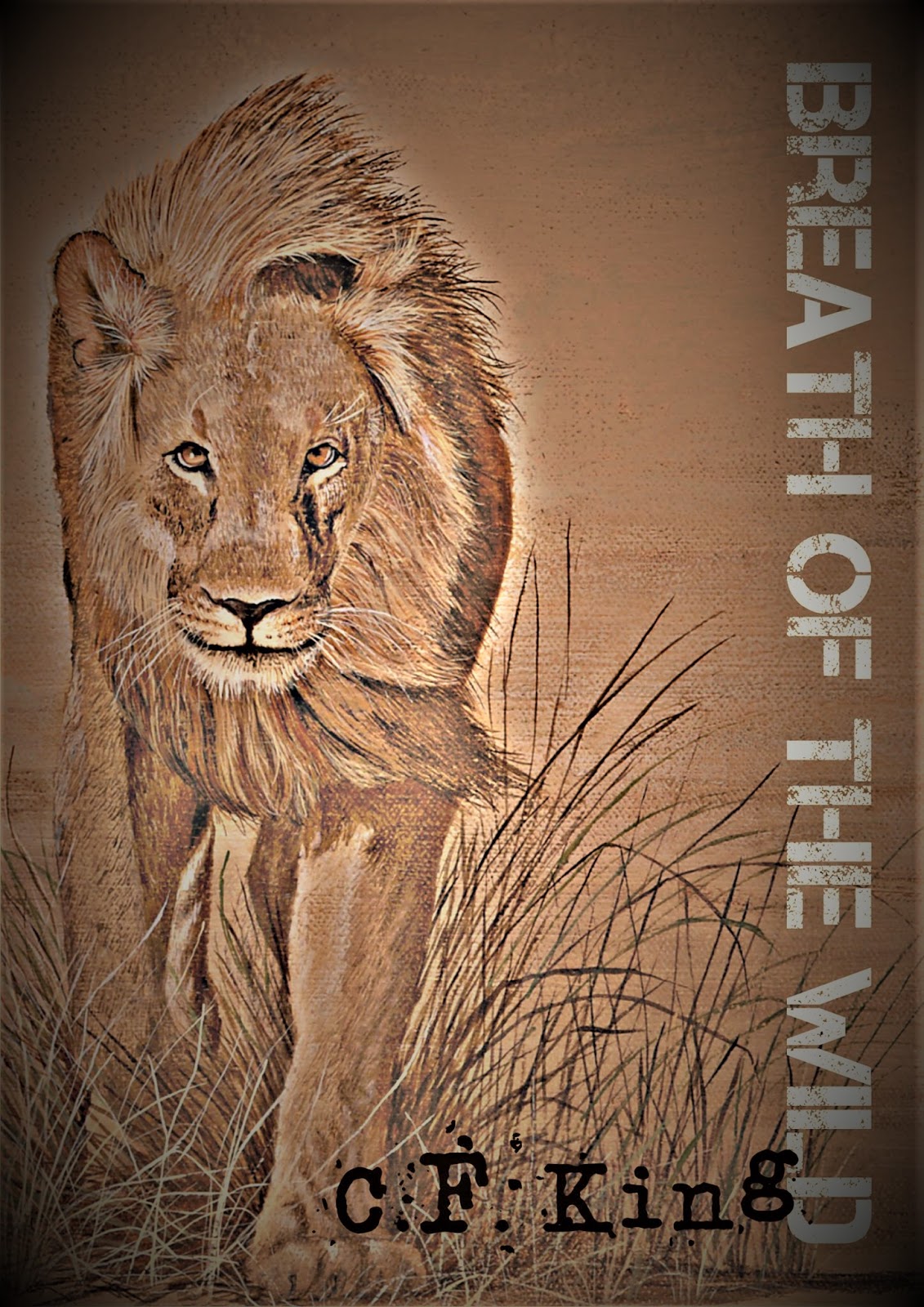
Next is Charlotte Firbank-King (C.F. King), a prolific writer and artist living in South Africa. She’s been editing and ghostwriting for Inspiration for Writers for about fifteen years. Here are a few of her own books.
Cape of Storms, 1872.
A spoilt liberal English girl arrives in the Cape Colony ready to take off into Africa. No one has ever thwarted her, until she meets her father’s taciturn wine estate manager.
Dara, the headstrong English suffragette arrives in the Calvinistic Cape Colony like a whirlwind. She is a gifted photographer and finds trouble the moment she sets foot in Africa. Her outspoken opinions set her at odds with the hardworking, reclusive Oran, who manages her father’s two wine estates in Stellenbosch.
Dara’s ailing father, in England, asked Oran to take her on a photographic safari. Oran readily agreed to his mentor’s request, until he met her. Not only is Dara irresistibly beautiful, but she’s contentious and a magnet for trouble. Claiming it’s inappropriate to spend months alone with Dara, Oran delays the trip for reasons that don’t suit her. Then events take an unexpected turn for both of them and Dara takes off with only her maid. She heads into the savage interior with no idea of how to survive the vast African wilderness. Oran chases after her from the Cape Colony to the Kimberly diamond fields, then to Zululand—a kingdom in turmoil as their new king, Cetshwayo, is crowned. Even here, Dara manages to find deadly trouble.

Hanoverian England, 1745 and the second Jacobite uprising. A man is so driven by revenge and righteous anger that the line between good and evil becomes blurred.
Marquis Blake de Montfort’s life is dark and his past violent. He is haunted by a murdered wife and child and obsessed with avenging their deaths. He ceases to care what separates good from evil as he walks his twilight path. Blake is the most powerful man at court, but his power is not vested in parliament—it’s more insidious. He’s a ruthless spymaster, hated by men, desired by women, and feared by all.
Blake is forced to marry Tanisha Ashburn, who unwittingly draws him from his path of destruction, but she has no idea she’s surrendered her life to intrigue, the lusts of men, and finally, betrayal.

There is no way to control a truly fiery free-spirit, except to crush it or risk burning with desire in the flames.
Against the Victorian backdrop of Impressionism and the awakening of women’s rights, the naïve Calla is a free-spirited, wild artist. Orphaned as a child and reared by the aged but liberal Earl of Felton, Calla has never known restraint, social or otherwise—until he dies.
Fire meets ice. Ryder is a lieutenant colonel ruled by discipline. From infancy, he has never known anything except restraint. Forced to leave his military career to take on the responsibility of a title, Ryder chooses a worthy lady to marry, but he is unprepared for the added responsibility of a ward, much less the lovely, unruly Calla. Determined to see her subdued and suitably married off, Ryder’s ordered life unravels in his pursuit to control her.

Cape of Storms, Africa, 1853. A harsh society, not a good place or time to be born a bastard.
One man takes Roark’s identity before birth. Those meant to nurture him shroud his life in secrets, abuse his body and break his spirit, until pride and his love for Tavia are all that remain. Then they tear away his love. The only recourse of a baseborn child, now a dangerous man, is revenge.
 Next on the list, we have Eric Fritzius, Inspiration for Writers' technical and website guru--as well as a prolific writer, editor, playwright, audiobook narrator, graphics designer, ebook formatter, and actor. His keen sense of humor keeps us all smiling, and his stories of the unknown keep us awake at night.
A CONSTERNATION OF MONSTERS A collection of 10 short stories of monsters and the paranormal in the tradition of the Twilight Zone, available in print ($12.99), ebook ($5.99), and audiobook ($14.95) formats. (Hear a SAMPLE)
Other books narrated by Eric Fritzius:

MISSISSIPPI NIGHTS by D.M. Webb, narrated by Eric Fritzius — A Christian romantic thriller that tells a story of one firefighter's struggles overcoming pain and addiction, which affect not only himself but those around him—especially his new love. Audiobook available from Amazon, Audible, and iTunes. (Hear a SAMPLE)

HOW TO CARRY BIGFOOT HOME by Chris Tarry, narrated by Eric Fritzius — a collection of adult literary fiction featuring settings and characters both grounded and fantastical, with equal parts comedy and often harrowing drama. Audiobook available from Amazon, Audible, and iTunes. (Hear a SAMPLE)

THE BLACK STAR OF KINGSTON by S.D. Smith, read by Eric Fritzius — A middle grade adventure novel featuring rabbits with swords. This is the first part of Smith's Tales of Old Natalia, which is a prequel series to his Green Ember series of novels.

THE LAST ARCHER by S.D. Smith, read by Eric Fritzius — A middle grade adventure novel featuring rabbits with swords as well as bows and arrows. A side-story set during the events of Smith’s Green Ember main series. Audiobook available from Amazon, Audible, and iTunes. (Hear a SAMPLE)
I know what you’re thinking: Where are the romances? No worries. Sandi Rog has you covered for sweet romances that have just the right amount of heartache. Sandi was the first editor to join Inspiration for Writers, way back in its early days—like maybe 1999? (But who’s counting? 😉) Sandi is also a prolific writer and editor, and is the founder of Tulpen Publishing, a Christian traditional publishing company.
By the way, Out of the Ashes won FIRST PLACE in the FHL Reader's Choice Awards. This was a prestigious contest (as they are associated with RWA) and not a popularity contest, so we’re really proud of her!

by Sandi Rog
A stranger. A kiss. A shotgun wedding.
NATHANIEL WARD, a wealthy entrepreneur, needs a wife. But he’s not interested in the preening, high-society women who are offered to him on a silver platter. He wants one woman, and one woman alone: the girl who gave him all the money in her reticule years ago when the Great Chicago Fire left him destitute. He sets out to find this woman and discovers she’s unattached. There’s only one problem: a shotgun wedding may be able to bind them, but will he ever be able to win her heart?
AMELIA E. TAYLOR blows a kiss to a street rat. Little did she know, years later that kiss would follow her to Green Pines Colorado. When a handsome stranger arrives in her hometown, she guards her heart from the stirrings this man ignites. Despite society’s disapproval of spinsterhood, she is determined not to marry, having witnessed first-hand the lack of love and the horrors that accompany marriage. But will a shotgun wedding reveal blessings that arise out of the ashes?

Next is Jessica Nelson, intern/editor/social media go-to-girl for IFW since 2014. Her prose poem I Am Not a Poet can be found in the Anthology of Appalachian Writers, Vol. VII, Homer Hickam Edition and her poem Irish Road Bowling (based on an old Irish sport that the men in her family have dragged her all over the state of West Virginia to play) is featured in the Anthology of AppalachianWriters, Vol. X, Wiley Cash Edition. The volumes also contain the works of respected writers such as Marc Harshman (poet laureate of West Virginia), Randi Ward, M. Lynne Squires, Anna Egan Smucker, and Natalie Sypolt. These anthologies are perfect for the readers in your life who love poetry and prose both but just can’t get through a full-length novel. (Photo credit: Wiley Cash.)

Last, but most certainly not least, we present Geoffrey Cameron Fuller, a New York Times best-selling author--and an editor and ghostwriter for IFW. He is the author or co-author of five books, including Full Bone Moon (a work of fiction inspired by the infamous WVU co-ed murders of the 1970s, which can be accompanied by his podcast about the real case), and his writing is credited in another dozen books.

Geoff recently teamed with Daleen Berry (Sister of Silence) to write about the stabbing murder of high school honor student Skylar Neese by her two best friends. Their work resulted in two books, The Savage Murder of Skylar Neese (BenBella Books; February 2014) and Pretty Little Killers: The Truth Behind the Savage Murder of Skylar Neese (BenBella Books; July, 2014). The crime and the books were featured on Dateline (NBC), Dr. Phil (NBC), 20/20 (ABC), and I Killed My BFF (Lifetime). The Savage Murder of Skylar Neese peaked at #12 on the New York Times bestseller list, and the second book, released in July, 2014, is also selling well.
Thanks for reviewing our books. Remember, we are always here to help you write or edit your own books. Just email us at IFWeditors@gmail.com. The first sample edit is free!
Thanks for reviewing our books. Remember, we are always here to help you write or edit your own books. Just email us at IFWeditors@gmail.com. The first sample edit is free!


 Posts


