Showing posts with label writers. Show all posts

Tuesday, December 4, 2018

Holiday Gift Ideas: IFW Books for Every Reader


Want to give the gift of reading or writing? We have you covered. First, we have gift certificates good for any our services, available in any dollar amount. If you want to truly encourage the writer in your life—or give a gift to yourself, we are offering 10% off the face value of all gift certificates ordered by December 25.  

If you or your loved one are more inclined towards reading, we have a selection of books by our Inspiration for Writers family for your enjoyment.


First up is Sandy Tritt, the founder and CEO of Inspiration for Writers, Inc. Although she normally writes fiction, her two most recent books are nonfiction. Her selections include a book for the writer in your life and one for the reader.

The PLAIN ENGLISH Writer's Workbook explains writing concepts in simple terms. It's written for fiction and memoir writers of all levels, from beginners to previously published. This workbook includes nine worksheets with detailed instructions to help you plot, create memorable characters, and edit your own work like a pro. Throughout the workbook, generous samples are given to show the right and wrong way to perform various techniques. EVERY WRITER NEEDS THIS BOOK.

LAUNDRY TO LOVE -- Everything I Know about Life.  When Sandy's oldest daughter was nearing high school graduation, Sandy suffered a major panic attack. Had she taught her daughter everything she needed to know? Had she shared the family recipes? Did her daughter understand the ethics she wanted to pass along? Sandy made notes all the things her daughters would need to know, then organized them by topic. As she cooked, she measured the pinches and pours and created recipes. Described as a marriage of Robert Fulghum and Martha Stewart, Laundry to Love gives practical hints, creative solutions, and unique outlooks on life (as well as 66 favorite family recipes)—a handbook for young women and men as they step out on their own. Perfect as a graduation or wedding gift, this book is also excellent for anyone who enjoys a fresh perspective sprinkled with a little humor. Laundry to Love is the life instruction book you didn't get. Until now.


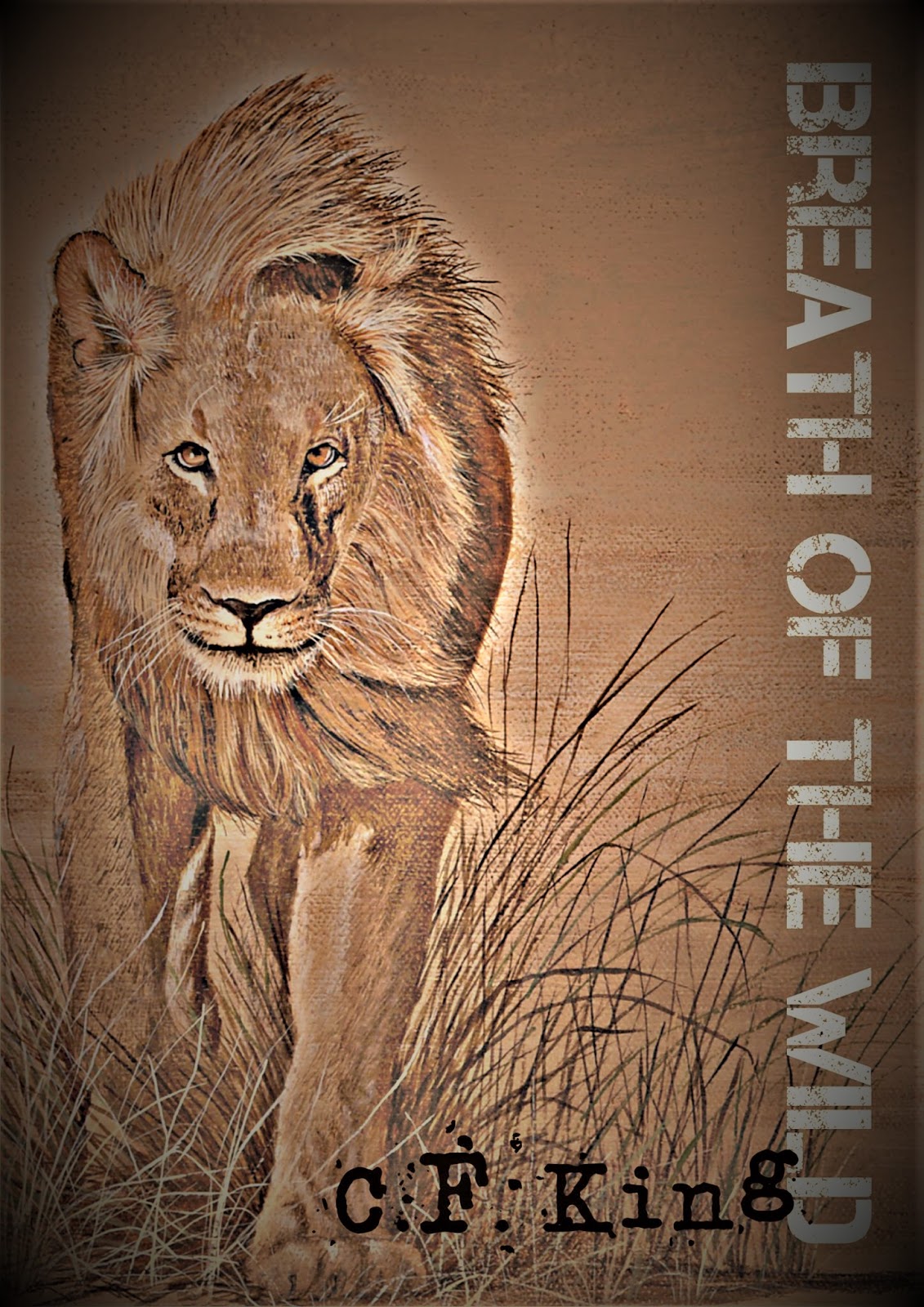
Next is Charlotte Firbank-King (C.F. King), a prolific writer and artist living in South Africa. She’s been editing and ghostwriting for Inspiration for Writers for about fifteen years. Here are a few of her own books.

Cape of Storms, 1872.

A spoilt liberal English girl arrives in the Cape Colony ready to take off into Africa. No one has ever thwarted her, until she meets her father’s taciturn wine estate manager.

Dara, the headstrong English suffragette arrives in the Calvinistic Cape Colony like a whirlwind. She is a gifted photographer and finds trouble the moment she sets foot in Africa. Her outspoken opinions set her at odds with the hardworking, reclusive Oran, who manages her father’s two wine estates in Stellenbosch.


Dara’s ailing father, in England, asked Oran to take her on a photographic safari. Oran readily agreed to his mentor’s request, until he met her. Not only is Dara irresistibly beautiful, but she’s contentious and a magnet for trouble. Claiming it’s inappropriate to spend months alone with Dara, Oran delays the trip for reasons that don’t suit her. Then events take an unexpected turn for both of them and Dara takes off with only her maid. She heads into the savage interior with no idea of how to survive the vast African wilderness. Oran chases after her from the Cape Colony to the Kimberly diamond fields, then to Zululand—a kingdom in turmoil as their new king, Cetshwayo, is crowned. Even here, Dara manages to find deadly trouble.


Hanoverian England, 1745 and the second Jacobite uprising. A man is so driven by revenge and righteous anger that the line between good and evil becomes blurred.


Marquis Blake de Montfort’s life is dark and his past violent. He is haunted by a murdered wife and child and obsessed with avenging their deaths. He ceases to care what separates good from evil as he walks his twilight path. Blake is the most powerful man at court, but his power is not vested in parliament—it’s more insidious. He’s a ruthless spymaster, hated by men, desired by women, and feared by all.

Blake is forced to marry Tanisha Ashburn, who unwittingly draws him from his path of destruction, but she has no idea she’s surrendered her life to intrigue, the lusts of men, and finally, betrayal.


There is no way to control a truly fiery free-spirit, except to crush it or risk burning with desire in the flames.


Against the Victorian backdrop of Impressionism and the awakening of women’s rights, the naïve Calla is a free-spirited, wild artist. Orphaned as a child and reared by the aged but liberal Earl of Felton, Calla has never known restraint, social or otherwise—until he dies.

Fire meets ice. Ryder is a lieutenant colonel ruled by discipline. From infancy, he has never known anything except restraint. Forced to leave his military career to take on the responsibility of a title, Ryder chooses a worthy lady to marry, but he is unprepared for the added responsibility of a ward, much less the lovely, unruly Calla. Determined to see her subdued and suitably married off, Ryder’s ordered life unravels in his pursuit to control her.


Cape of Storms, Africa, 1853. A harsh society, not a good place or time to be born a bastard.

One man takes Roark’s identity before birth. Those meant to nurture him shroud his life in secrets, abuse his body and break his spirit, until pride and his love for Tavia are all that remain. Then they tear away his love. The only recourse of a baseborn child, now a dangerous man, is revenge.


Next on the list, we have Eric Fritzius, Inspiration for Writers' technical and website guru--as well as a prolific writer, editor, playwright, audiobook narrator, graphics designer, ebook formatter, and actor. His keen sense of humor keeps us all smiling, and his stories of the unknown keep us awake at night.

A CONSTERNATION OF MONSTERS  A collection of 10 short stories of monsters and the paranormal in the tradition of the Twilight Zone, available in print ($12.99), ebook ($5.99), and audiobook ($14.95) formats. (Hear a SAMPLE)  


Other books narrated by Eric Fritzius:


MISSISSIPPI NIGHTS by D.M. Webb, narrated by Eric Fritzius — A Christian romantic thriller that tells a story of one firefighter's struggles overcoming pain and addiction, which affect not only himself but those around him—especially his new love.  Audiobook available from Amazon, Audible, and iTunes.  (Hear a SAMPLE)

HOW TO CARRY BIGFOOT HOME by Chris Tarry, narrated by Eric Fritzius — a collection of adult literary fiction featuring settings and characters both grounded and fantastical, with equal parts comedy and often harrowing drama.  Audiobook available from Amazon, Audible, and iTunes.  (Hear a SAMPLE)


THE BLACK STAR OF KINGSTON by S.D. Smith, read by Eric Fritzius — A middle grade adventure novel featuring rabbits with swords. This is the first part of Smith's Tales of Old Natalia, which is a prequel series to his Green Ember series of novels.  

Audiobook available from Amazon, Audible, and iTunes.  (Hear a SAMPLE)

THE LAST ARCHER by S.D. Smith, read by Eric Fritzius — A middle grade adventure novel featuring rabbits with swords as well as bows and arrows.  A side-story set during the events of Smith’s Green Ember main series. Audiobook available from Amazon, Audible, and iTunes.  (Hear a SAMPLE)


I know what you’re thinking: Where are the romances? No worries. Sandi Rog has you covered for sweet romances that have just the right amount of heartache. Sandi was the first editor to join Inspiration for Writers, way back in its early days—like maybe 1999? (But who’s counting? 😉) Sandi is also a prolific writer and editor, and is the founder of Tulpen Publishing, a Christian traditional publishing company.

By the way, Out of the Ashes won FIRST PLACE in the FHL Reader's Choice Awards. This was a prestigious contest (as they are associated with RWA) and not a popularity contest, so we’re really proud of her! 


by Sandi Rog

A stranger. A kiss. A shotgun wedding.

NATHANIEL WARD, a wealthy entrepreneur, needs a wife. But he’s not interested in the preening, high-society women who are offered to him on a silver platter. He wants one woman, and one woman alone: the girl who gave him all the money in her reticule years ago when the Great Chicago Fire left him destitute. He sets out to find this woman and discovers she’s unattached. There’s only one problem: a shotgun wedding may be able to bind them, but will he ever be able to win her heart?

AMELIA E. TAYLOR blows a kiss to a street rat. Little did she know, years later that kiss would follow her to Green Pines Colorado. When a handsome stranger arrives in her hometown, she guards her heart from the stirrings this man ignites. Despite society’s disapproval of spinsterhood, she is determined not to marry, having witnessed first-hand the lack of love and the horrors that accompany marriage. But will a shotgun wedding reveal blessings that arise out of the ashes?


Next is Jessica Nelson, intern/editor/social media go-to-girl for IFW since 2014. Her prose poem I Am Not a Poet can be found in the Anthology of Appalachian Writers, Vol. VII, Homer Hickam Edition and her poem Irish Road Bowling (based on an old Irish sport that the men in her family have dragged her all over the state of West Virginia to play) is featured in the Anthology of AppalachianWriters, Vol. X, Wiley Cash Edition. The volumes also contain the works of respected writers such as Marc Harshman (poet laureate of West Virginia), Randi Ward, M. Lynne Squires, Anna Egan Smucker, and Natalie Sypolt. These anthologies are perfect for the readers in your life who love poetry and prose both but just can’t get through a full-length novel. (Photo credit: Wiley Cash.)


Last, but most certainly not least, we present Geoffrey Cameron Fuller, a New York Times best-selling author--and an editor and ghostwriter for IFW. He is the author or co-author of five books, including Full Bone Moon (a work of fiction inspired by the infamous WVU co-ed murders of the 1970s, which can be accompanied by his podcast about the real case), and his writing is credited in another dozen books.

Geoff recently teamed with Daleen Berry (Sister of Silence) to write about the stabbing murder of high school honor student Skylar Neese by her two best friends. Their work resulted in two books, The Savage Murder of Skylar Neese (BenBella Books; February 2014) and Pretty Little Killers: The Truth Behind the Savage Murder of Skylar Neese (BenBella Books; July, 2014). The crime and the books were featured on Dateline (NBC), Dr. Phil (NBC), 20/20 (ABC), and I Killed My BFF (Lifetime). The Savage Murder of Skylar Neese peaked at #12 on the New York Times bestseller list, and the second book, released in July, 2014, is also selling well.


Thanks for reviewing our books. Remember, we are always here to help you write or edit your own books. Just email us at IFWeditors@gmail.com. The first sample edit is free!

Friday, September 22, 2017

What Solving Puzzles Can Teach You About Writing

by
Jessica Nelson


Lately, my family has been into jigsaw puzzles. It started in July on our annual family vacation. There were several rainy evenings, so we picked up a couple of puzzles from Boulineau’s to entertain ourselves when we couldn’t go out. And so began our puzzle-working addiction. We are now on our seventh puzzle since July, each one with more pieces than the previous.

As we’ve worked our way through the triumphs and the disappointments, I’ve realized that writers can learn a lot from solving puzzles. Here are some lessons I’ve learned.

1. There’s always that piece that almost fits. As you put together your puzzle, you inevitably find pieces that look like they should fit somewhere, but they don’t. They have the right shape and the right colors. Sometimes, the piece even appears to fit at first, but then you discover it’s in the wrong place when other pieces don’t fit around it. The same thing happens in storytelling when you have information important to the story, just not in the right place. This could be exposition or backstory or even a scene that you know has to fit into the big picture somewhere; it just doesn’t fit right there. It’s okay if whatever piece of the story doesn’t fit right away—don’t force it. Be patient, and eventually you’ll find the right placement.

2. Knowing when to move on. When you've been looking at that same section of puzzle for so long that you can't even see it anymore—like when you've been trying to figure out the same scene for days—it's time to move on to a different section. Or, in this case, a different scene or a different story altogether. We’ve all been there. In my house, while working on the puzzle, we periodically rotate positions or move onto a new section so we don’t get burnt out focusing on one place. Sometimes we get stubborn and refuse to move on to a different part of the puzzle, which just leaves us frustrated. As writers, we tend to do the same thing. We fixate on one scene or chapter or story and keep at it, even if we aren’t doing any productive work on it. Even when we are only driving ourselves crazy. Puzzle making has taught me to know when to move on and work on something else. Don’t worry, whatever is driving you up a wall will still be there later. In the meantime, take a step back, let your eyes readjust, let your brain clear and refocus, and go work on something else for a while.

3. How to see the big picture. Related to my first point, sometimes you’re convinced a piece has to go in a certain section because of its colors or patterns, so you spend hours trying to make it work in that part of the puzzle. But when you step back and look at the whole puzzle, you realize those same colors occur elsewhere, and that piece you’ve been trying to force for hours actually belongs somewhere else. Sometimes the same thing happens when you write. You try to fit a scene or a character into a story, but when you take a step back and look at the big picture, you realize it may not belong in that part of the story. Or maybe it doesn’t belong in the story at all. When you view the big picture, you can see what’s working and what isn’t. You can see what sections are complete and what needs to be developed.

I recommend breaking out a puzzle—even one of those hundred-piece puzzles that take less than a day to complete—and see what you can learn from puzzle working. And when you’re done (and your brain is refreshed), get back to writing! Once you get one story solved, you’ll be ready to take on the next. And the next. And the next.

Thursday, November 17, 2016

It's all about the Mindset

by
Charlotte Firbank-King


I watched a video about mindset by Dr. Carol Dweck, and it occurred to me that many writers, seasoned or new, have a mindset that holds them back from their full potential. This is also true concerning a lot of things we do. Think along the lines of the story “The Little Engine That Could.” The engine chugs up a hill saying, “I think I can, I think I can.” Then as it nears the summit, its chant becomes, “I know I can! I know I can!” That’s a positive mindset.

According Dr. Dweck, a high school in Chicago had a strange but effective grading system. If students didn’t pass a test, they got the grade “Not yet.” This meant they could achieve their goal; they just weren’t there yet.

She gave a test with problems slightly too difficult for the students. Some of the students flourished in the “not yet,” but some were stuck in the “now.”

Some loved the challenge and, according to Dr. Dweck, they had a “growth” mindset. The “not yet” mindset gave them a path to the future—they understood they were on a learning curve and that their capabilities could be developed.

Other students thought it was awful and their intelligence was being judged because they failed. Dr. Dweck said they came from a fixed mindset, a “now” mindset. Instead of luxuriating in the power of “not yet,” they were gripped in the tyranny of “now.”

So many times writers battle with the various skills needed to make their creative writing truly sing. As an editor, we see the struggles writers encounter with “show, don’t tell,” controlling viewpoint, writing effective dialogue, and all the other aspects of mastering the skill of creative writing—frankly, the list is exhaustive.

Often, when faced with this seemingly endless list, new writers become discouraged, trapped in the “now” mindset. But if they would only change their mindset to “not yet,” they will succeed.

See every word, sentence, phrase, paragraph, and chapter as a challenge and never run from difficulty. Run to it, embrace it. Luxuriate in the power of “not yet” and push free from one’s comfort zone, free from the tyranny of “now” and failure.

The biggest thing in your favor is your passion to write. Even when your head is spinning and your eyes burning as you try to grasp the different rules and skills of creative writing, don’t forget your passion and don’t take your eye off “not yet” for a second.

Even when you grasp all the rules and skills to write well, don’t stop there. Keep your eye on the “not yet” mindset and strive to be better. Otherwise, it’s too easy to fall into another trap when success is achieved—complacency.

A twelfth century cleric in the court of Phillippe of Alsace, the Count of Flanders, coined the phrase in French: Rome ne s’est pas faite en un jour. Rome wasn’t built in a day. They never gave up their quest to rule the known world. Of course, after several centuries, they developed an attitude of, “We’re unbeatable, so we can rest on our laurels.” This is complacency. This is dangerous.

The definition of “resting on one’s laurels” is to be satisfied with distinction won by past achievements and cease to strive for further achievements. So, even if you’ve published a successful book, don’t think you’ve got this writing thing waxed. Never rest on your laurels—never decide a sentence, phrase, or even the whole manuscript is good enough. Always strive for that perfect set of words that will make a sentence or phrase pop until the story is packed with wonderfully crafted words.

Never stop the “not yet” mindset.

Thursday, September 29, 2016

Cheese for Writers

by
Charlotte Firbank-King


There are hundreds of varieties of cheese, each made in different ways, just like stories are written in various ways. Then, within each “genre” of a particular cheese, there are even more differences. For example, one could have cream cheese with chives, garlic, or chili. In addition, cheeses require different conditions or times in which to mature to the point of being delicious.

All “real” cheeses are made from milk—just like all stories are made from words. Some cheeses, like ricotta or cream cheese, are easy and quick to make with milk and whatever you have in the kitchen—yet they still need sterile conditions. Ricotta also needs just the right temperature and length of heating time and the addition of lemon juice in order for curds to form. It also needs a dash of salt and then has to drain for the right amount of time with the correct type of cheese cloth to be perfect.

A short story or poem is like ricotta cheese. It also needs sterile conditions (a clear mind), the right temperature (creativity) to form the curd (idea). Then it requires the correct cheese cloth (editing) to drain out all the whey (typos, adjectives, etc.) until it tastes (story flows and sounds) delicious.

Hard cheeses like cheddar or parmesan, or softer ones like blue cheese or brie, are like full-length novels. They need more time, care, and attention to mature. They need special cultures (research). Airborne cultures (incorrect research info) must be kept out by means of perfect, protected conditions (researching the researched source). Every step in making these cheeses is meticulously executed (attention to every word and sentence). Temperature, humidity, and turning are all undertaken diligently (edited and re-edited—many times). The cheeses are monitored to avoid contamination (too much contradictory advice or negative feedback). When the cheese is mature, a cheese expert, an affineur (editor), tastes and tests the cheese (story) to check if it’s perfect. Sometimes the cheese must mature longer (needs additional edits).

Throughout the ages, caves were used to ripen cheese. The temperature and humidity in a cave is constant and therefore perfect for specific cheeses.

What conditions do writers need for their brand of cheese (story)? Well, they need a cheese cave then, don’t they? A place set aside for them in which to write. Roald Dahl used a shed at the bottom of his garden for peace and quiet. What caves do other writers like?

Let’s have some fun and see if you recognize what cheese/genre your stories fall under.

Blue cheese writer: horror stories. If horror is all one writes, then this writer must stay away from other cheeses (genres) because the culture used for blue cheese is very powerful and attacks other cheeses. Don’t get me wrong—I love blue cheese. But what sort of cave (environment) does the blue-cheese writer prefer? Maybe they need to surround themselves with dark creepy forests or a place covered in cobwebs. Perhaps they fill their “cave” with eerie music.

The brie writer: romance stories. This cheese (genre) can be oozy and even cheesy (pun intended). Generally, brie (romance) can be made (written) fairly quickly and doesn’t need long to mature, but conditions must be perfect. What cave does this writer need? Maybe a romantic setting with plenty of roses and jasmine, along with romantic lyrics permeating the air.

The ricotta cheese writer: short stories and poems as mentioned above. So what sort of cave do they need? A coffee shop or any busy place with plenty of material moving about, or perhaps peace and quiet.

Mature cheddar cheese writer: historical, mystery, or suspense novels. Like cheddar, there are many pitfalls and mistakes that can be made in the complexity of this cheese (genre). The culture (research) has to be meticulous. The maturation period takes longer (more editing) to ensure the tastes (plot sequences) are correct and flow.

But in the end, all writers, despite their genre, have different needs. Some like a no-people, peace and quiet environment. Others combine the no-people thing with music or even a television—they don’t require conversation. There are those who can work in the living room surrounded by noisy dogs, kids, and a chatty spouse, plus the television and music. Hats off to them.

The point is, a writer’s refuge has to be like a cheese cave. We need a spot where the conditions are just right. The important thing is to find the right cave for your cheese (genre) to mature (write) in.

Wednesday, November 18, 2015

Writer Cocktail

by
Charlotte Firbank-King


Writers are a cocktail of madness. We’re psychotic, bent on killing those we love with as much impunity as those we hate. We wallow in death, misery, and general mayhem. Couple that with being pathological liars and master manipulators, then top it off with a dash of perpetual fried-brain and, oh, did I mention that we also have scant regard for laws and rules—of the English language or of social etiquette, that is. We fabricate words and foist them on unsuspecting readers who can’t even refer to a dictionary or Google to find out what the words mean. So that also makes us narcissistic deceivers. But we really don’t care as long as what we write is believable—and even that isn’t a given—we don’t care if it isn’t believable, because we will turn the reader into a believer.

Writers are a lone species of Homo sapiens. Okay, maybe we aren’t actually human.

Alice was an amateur when it comes to disappearing down rabbit holes. We probably shouldn’t marry and should definitely be neutered. The truth is, there’s no room in a writer’s life for anything except the characters we live through vicariously. But we gird our loins and periodically return to real-life like a meteorite hitting Earth. Our family will re-introduce themselves as we try not to call them by our characters’ names or warn them of some impending disaster that’s about to ruin their lives—note to self—that’s your daughter, idiot, not the character.

When we’re on a roll, we writers have this odd habit of ignoring dress code. We leap out of bed with ideas fermenting in our deranged, but very fertile brains, and head for the laptop or pen and paper. The only thing we may do en route is switch on the coffee machine. Five hours later, we’re surrounded by books, along with empty and full coffee cups ranging from cold to hot, and we’re still in our pajamas. We happily beat away on the PC, birthing new characters or killing off others in the most inventive ways. We transport ourselves to a thousand years back or a thousand years ahead. We go to countries and planets never heard of—we live in the realm of the impossible made possible through words. Sigh. What a divine place we live in.

Writers will discuss their characters as if they are real, and to us, they very much are. A conversation between writers could go like this:

Writer 1: “I don’t know what to do about Joe. He wants to head the narc operation, but he’s not ready and he’s too weak.”

Writer 2 understands completely and gives a sage nod: “I agree, he’s spineless. Kill him off.”

Writer 1 runs fingers distractedly through tousled hair and bites lip: “He wasn’t supposed to be a wimp—he’s the damn hero.”

Writer 2 sighs: “I know. It’s a pain in the arse when they won’t behave. My Mary was supposed to be the wilting damsel in distress, and now the slag is taking control. I might have to shoot her. I tried to get Mark to do it, but he’s not cooperating because the stupid sod thinks he’s in love with her.”

If non-writers happen to overhear this rather bizarre conversation, they may think they’ve landed in some sort of twilight zone. And they have—that’s where writers live.

Writers have long since learned to ignore certain responses to questions people ask. Usually starting with, “What do you do?”

“I write.”

“Wow, I’ve never met a writer.” Their brow furrows as they process the information. “Is that a real job?”

“Eh? It isn’t a job!”

“Oh.” Eyebrows rise. “Then how do you make a living?”

“What? Damn, dude, that question is so not relevant.”

Confusion reigns. “Not relevant?”

The person will get a long, direct look as we size them up—how will they fit into the next novel? That one predatory look usually has them backing off nervously, especially when you mutter that they would be a good fit for the villain you need to kill off in the next book. Some people don’t back down, but rush in and tell us about their lives or a friend’s life. Perfect. Absolutely perfect.

People need to understand that writers don’t operate in the same realm as say, a stockbroker, but we sure can write about one.

If one unobtrusively observes a writer, one may see them making faces or speaking to themselves in odd voices. Even getting themselves into weird physical positions. Writers are known for doing crazy things like crawling into a snake pit just to see how it feels—maybe that’s a little extreme, but they may sit at the bottom of a pool to see what it’s like to drown. Writers will certainly cut themselves to see what blood tastes or smells like. All experiments are toward one end—instilling realism into a story.

If you find a person watching you intently at an airport, shopping mall, or any public place, it may not be a psychotic stalker—not that there’s much difference—but it’s probably a writer, especially if he is making notes on any available scrap of paper. Cause a scene and make his day.

Writers will buy books worth hundreds of dollars for one paragraph of information. The books will probably sit on a shelf for the rest of the writer’s life. We don’t part with books—ever, especially reference books. You’d have to kill us first.

The moral of this convoluted discourse is: don’t become a writer if you value your sanity.

Wednesday, May 20, 2015

Six Things You Need to Know About Your Writer

by
Rhonda Browning White


Today we're sharing this popular (and accurate) blog essay, "Six Things You Need to Know About Your Writer," written by IFW editor, Rhonda Browning White. You can read more of Rhonda's essays with reading recommendations, writing advice, travel, dining, and even an occasional recipe or two, on her blog, Read.Write.Live! at RhondaBrowningWhite.com.


So your friend—or, God help you, your spouse—is a writer. Chances are, the more you get to know your writer, the more confused you’ll feel. Writers are odd ducks. We’re fun. We’re irritating. We’re enigmas and amoebas. How are you supposed to make sense of someone who flip-flops more than cheap rubber shower thongs? It’ll help you to know a few things about us that might make us a little easier to understand. Or not. No one says we are easy.

1. We are extroverted introverts. Writers realize the importance of socialization; in fact, we’re often pushed to network, self-promote, and mingle in order to make the necessary connections to publish our work, or sell it once it is published, so that we can publish again. We can juggle Facebook, Pinterest, and Twitter, all while texting and providing riotous dinner-party banter. Sometimes we are wildly gregarious, prone to spontaneous road trips or bar-hopping. We can be the life of the party, cracking witty jokes you can’t wait to tell your friends at the water cooler, and boogying to every song the band plays. Don’t count on our amusing behavior to last, however, because . . .

2. We are introverted extroverts. You know that party we looked forward to all week? The one we chattered about incessantly, the one for which we bought a sparkly dress and fabulous shoes? We might arrive and sit quietly in a corner. Yes, last weekend we sang karaoke at midnight and break-danced as an encore, but this weekend we’re happy to play the wallflower, soaking up all that energy we expended the last time we were out. We’re having fun—don’t think we aren’t, even if we’re not smiling—because we’re watching, we’re processing, and we’re thinking. And it’s likely that something we see, hear, smell, feel, or taste will show up later in the story we’re writing.

3. We are usually right. Writers are sometimes perceived as know-it-alls. It isn’t that we believe we know everything, though we surely wish we did. We’re avid researchers, constant readers, and we’re always questioning how this works and why that doesn’t. We study the ingredients on cereal boxes. Our dictionaries actually wear out from overuse. Our Google search history could easily get us arrested. We’re smart, because we thirst for knowledge like a sponge in the Sahara Desert, and we’ll track down an expert for answers as doggedly as if he were the Aquafina man. When we offer unsolicited advice, consider it a gift (this is one we hope you’ll return!), because we give it in the spirit of helpfulness, not haughtiness.

4. But we are often wrong. And it breaks our hearts. It embarrasses us. Mortifies us. Many times, we know the answer, but our always-in-overdrive brains sometimes can’t shift gears quickly enough to turn a tight corner. So when you ask us the difference between a simile and a metaphor, and we answer incorrectly—though we’ve known the answer at a cellular level since third grade—it isn’t because we’re dumb. It’s because our minds are absorbing new information, or we are creating a new character in our minds, or writing a scene for a work in progress—or all of this is happening simultaneously in our heads while we’re attempting to answer your question. Besides, if we truly don’t know the answer, you can bet we’ll look it up.

5. We are not ignoring you. Yes, you’ve said our name three times, and when we finally respond, we ask you to repeat yourself twice. It’s sometimes difficult for us to come back to this planet when we are in a world of our own making. We are often visiting universes that we’ve created inside of our heads. We have to go there. Have you ever read a story and envisioned the scene as if it were playing out in front of you? That’s because a writer became so intensely involved in the creation of that setting that she pictured it in vivid detail—scents, sounds, surfaces, and more—so much so that she temporarily blocked out this world in order to create that one. It’s a necessary part of the job, and it’s what makes us good at what we do. It’s hard to hear you when we’re intently listening to the monologue or dialogue inside of our heads. Be patient. Repeat yourself. We’ll catch up to you.

6. Except when we’re ignoring you. Writing is a solitary profession driven by creativity that requires deep internal thought. The busyness and business of everyday life must be shut out both mentally and physically for us to work at peak capacity and get in touch with our highest creative selves. We’re okay with shutting the door—and locking it. We’re fine going all week without television, and we may equally be fine letting it play all day on the same unwatched channel. We don’t feel guilty letting your call go to voicemail. (In fact, when we’re writing, a ringing phone can be the equivalent of a pipe bomb exploding in our laps.) We can exist for days on coffee and candy corn or wine and Doritos. Don’t worry. We’ll come around soon enough, and we’ll again be ready to jabber until your ears wear out or spin you around the dance floor until your legs grow numb.

We know we’re different. We’re okay with that. And we hope with every breath that you’re okay with it, because we need you. When we come back to this earth, this country, this room, we want to find you there. After all, it’s you we’re writing for.

Tip for Writers: Be sure to email the link to this article to your your friend or significant other, or print it out and strategically place it where they will see it. Then get back to writing.

Wednesday, November 5, 2014

NaNoWriMo

by
Stacy Tritt


It’s that time of year again. The scent of pumpkin spice and cinnamon apples permeate the air, the first frost of the season killed my chrysanthemums for good last night, daylight savings time changing gave me one more precious hour of sleep, and, most importantly, it’s noshavenovember National Novel Writing Month (NaNoWriMo)! So grab your keyboards, it’s time to hunch over our laptops with some hot apple cider and quit finding excuses to not write!

Okay, so maybe you aren’t so gung-ho about dedicating yourself to writing 50,000 words before the end of the month. Well, that doesn’t mean you’re a complete party pooper. There are still ways to get inspired, get motivated, and get encouragement from fellow writers without having to participate in NaNoWriMo, at least on the surface. Because this blog is all about using the resources from NaNoWriMo to your advantage, whether you are actively trying to write a new 50,000 word novel in one month, or not.

There are so many wonderful resources the NaNoWriMo organization offers to the writing community. Here’s my take on the best they have to offer:

When you sign up for NaNoWriMo, you select which region you’re from, so no matter if you are in Paw Paw, West Virginia or in New York, New York, you can find some writers nearby with whom you can network, and with whom you can exchange encouragement. The best part about these local groups? Write-ins! I can’t explain how wonderful it is to sit around a table at the local library or coffee shop with a bunch of strangers while you all type away—different worlds being created behind each screen. The creative energy that flows forth at such a gathering is something I have never experienced in any other setting. Write-ins can have many different nuances depending on who plans it, and who attends. Fun caveats are often added, like everyone puts a dollar on the table, and the first person to write 500 words gets the money, or everyone is banned from getting up from the table until everyone has written 300 words. These types of activities not only encourage you to get more words on paper, but they encourage you to utilize the writers around you, and allow them to utilize you. By encouraging and supporting each other, we all become better, more effective, and efficient writers.

NaNoWriMo offers various other inspirational resources. The NaNoWriMo organization gets professional writers from all over the country to send out encouraging messages to the participants of NaNoWriMo each week, as well as sending out new ideas on how to refresh your drive to write. If that isn’t enough, there are virtual write-ins for those in areas where there are fewer writers, or for those who are afraid of meeting strangers in coffee shops to participate in write-ins.

Word sprints are also great tools NaNoWriMo participants use to get words on paper, because, let’s face it, without getting the words out on paper, it is impossible to ever edit it up to be a best-seller. Word sprints can be done individually, or in groups in person or online. The idea of a word sprint is to write a set number of words in a designated period of time. Only have a half hour to write today? Make that half hour count by challenging yourself to write 500 words in that time. Seem crazy, impossible maybe? Try it. You’ll be surprised at how quickly you can prove yourself wrong.

Some of you are probably wondering why these resources can’t be used by writers who don’t write long prose, or during months when everyone isn’t jumping on a writing marathon bandwagon. Here’s the best part: they can be! These resources can be personalized to any writer. If you’re a songwriter, great! Go sit around a table at a coffee shop with a bunch of other writers, and get the words to a new song down on paper before you leave. When January rolls around and you get snowed in, utilize writing sprints to get entire scenes written between hot cocoa breaks. The important thing is to forge friendships with fellow local writers now so that you can plan write-ins throughout the year. It is important to learn new techniques, to take advantage of new (and free!) writing opportunities, and, most importantly, to get yourself started on a regimen where you make time to write. NaNoWriMo isn’t just a trend, it is a resource for all writers, one which you should take advantage of while it’s available.

So, once you’re done reading this blog, head on over to NaNoWriMo.org, start meeting new writers, start learning new techniques, open up that fresh, new word document, and start writing! Your novel is waiting.