Showing posts with label writing tips. Show all posts

Monday, June 15, 2020

What's a Gawking Narrator?


By Jessica Murphy

Jessica Murphy
A “gawking character” is a narrator who tells the reader what happens in a scene instead of letting the reader experience it directly. This is also called narrator intrusion, and it robs the reader of the full experience, thus distancing him from the story. A gawking character looks like this:

Gawking: Adam saw the orange glow and the rolling black smoke in the sky from where he stood on the corner of the block. As he jogged down the sidewalk toward it, he felt a cool breeze and smelled burning wood. He ducked under the branch of a tree and saw the burning house. From where he stood, he felt the intense heat and heard the flames roar and pop. Adam stepped forward toward the open front door but felt the searing heat from the sidewalk drive him back.

The bold words show you where the narrator steps between the reader and the action and tells the reader what happens. This detracts from the reader’s experience. A scene must allow the reader to experience the action directly in order to grab him. Would you prefer to watch a friend eat a hot fudge sundae and tell you how sweet it tastes, or would you want to eat it yourself?

A gawking character is also redundant. If the scene is told from the character’s perspective, we already know that he experiences what we read. We don’t need to say the same thing twice. Here is the same sentence without the gawking character:

Direct: Adam glanced up from the corner of Kingwood and Beechurst. The starlit sky glowed orange, and thick smoke rolled across it. He spun on one heel, crunching grit on the sidewalk beneath his shoes, and ran down the street. The cool autumn breeze carried sparks and the smell the burning wood. Adam brushed the branches of a tree out of his face. In front of him, a house burned.

A rushing roar filled Adam’s ears, and a wave of heat lifted the hairs on his tan arms. Shading his blue eyes with his right hand, he squinted against the blinding light. Flames engulfed every inch of the house and licked at the cloudless sky. Pops and crackles from inside the house echoed down the empty street. Adam rushed toward the front porch, but the heat seared his face and drove him back.

This time, the narrator does not water down the scene. We see no “Adam felt,” “Adam saw,” “Adam heard.” Instead, the reader is the one standing on the sidewalk, the one who sees the flames, feels their heat, hears their roar. This kind of direct experience captivates the reader and keeps him interested.

Nonphysical Gawking
A gawking character can also filter internal experiences, such as thoughts or emotions. Again, if the scene is being told from the character’s perspective, we can assume that any thoughts belong to that character (unless he or she can read thoughts or sense emotions).

Gawking: Blood soaked through the fabric, and Preston realized he had plunged the blade into Jack’s side.

This scene is told from Preston’s point of view, so he must be the one realizing something. We don’t need to state the obvious.

Direct: A red stain spread across Jack’s gut, matting the shirt to his skin. The silver blade glinted from where Preston had plunged it in Jack’s side.

The same holds true for emotions:

Gawking: I felt worried, but a breeze made me feel a little better.

This is told in first person point of view, so the narrator must be the one who felt worried. After all, he cannot feel another character’s emotions. So, stating what the narrator felt is redundant.

Direct: My stomach churned, but the crisp air cooled my feverish skin and the nausea settled for the moment.

If you take out the gawking character, the reader can experience every scene directly. Any less cheats him out of the story and, in the end, loses him.

If you need help with this concept, shoot us an email (IFWeditors@gmail.com). We're happy to look at your sample and tell you how to make it better. And, remember, we offer free sample edits. We're here for you!

Tuesday, December 4, 2018

Holiday Gift Ideas: IFW Books for Every Reader


Want to give the gift of reading or writing? We have you covered. First, we have gift certificates good for any our services, available in any dollar amount. If you want to truly encourage the writer in your life—or give a gift to yourself, we are offering 10% off the face value of all gift certificates ordered by December 25.  

If you or your loved one are more inclined towards reading, we have a selection of books by our Inspiration for Writers family for your enjoyment.


First up is Sandy Tritt, the founder and CEO of Inspiration for Writers, Inc. Although she normally writes fiction, her two most recent books are nonfiction. Her selections include a book for the writer in your life and one for the reader.

The PLAIN ENGLISH Writer's Workbook explains writing concepts in simple terms. It's written for fiction and memoir writers of all levels, from beginners to previously published. This workbook includes nine worksheets with detailed instructions to help you plot, create memorable characters, and edit your own work like a pro. Throughout the workbook, generous samples are given to show the right and wrong way to perform various techniques. EVERY WRITER NEEDS THIS BOOK.

LAUNDRY TO LOVE -- Everything I Know about Life.  When Sandy's oldest daughter was nearing high school graduation, Sandy suffered a major panic attack. Had she taught her daughter everything she needed to know? Had she shared the family recipes? Did her daughter understand the ethics she wanted to pass along? Sandy made notes all the things her daughters would need to know, then organized them by topic. As she cooked, she measured the pinches and pours and created recipes. Described as a marriage of Robert Fulghum and Martha Stewart, Laundry to Love gives practical hints, creative solutions, and unique outlooks on life (as well as 66 favorite family recipes)—a handbook for young women and men as they step out on their own. Perfect as a graduation or wedding gift, this book is also excellent for anyone who enjoys a fresh perspective sprinkled with a little humor. Laundry to Love is the life instruction book you didn't get. Until now.


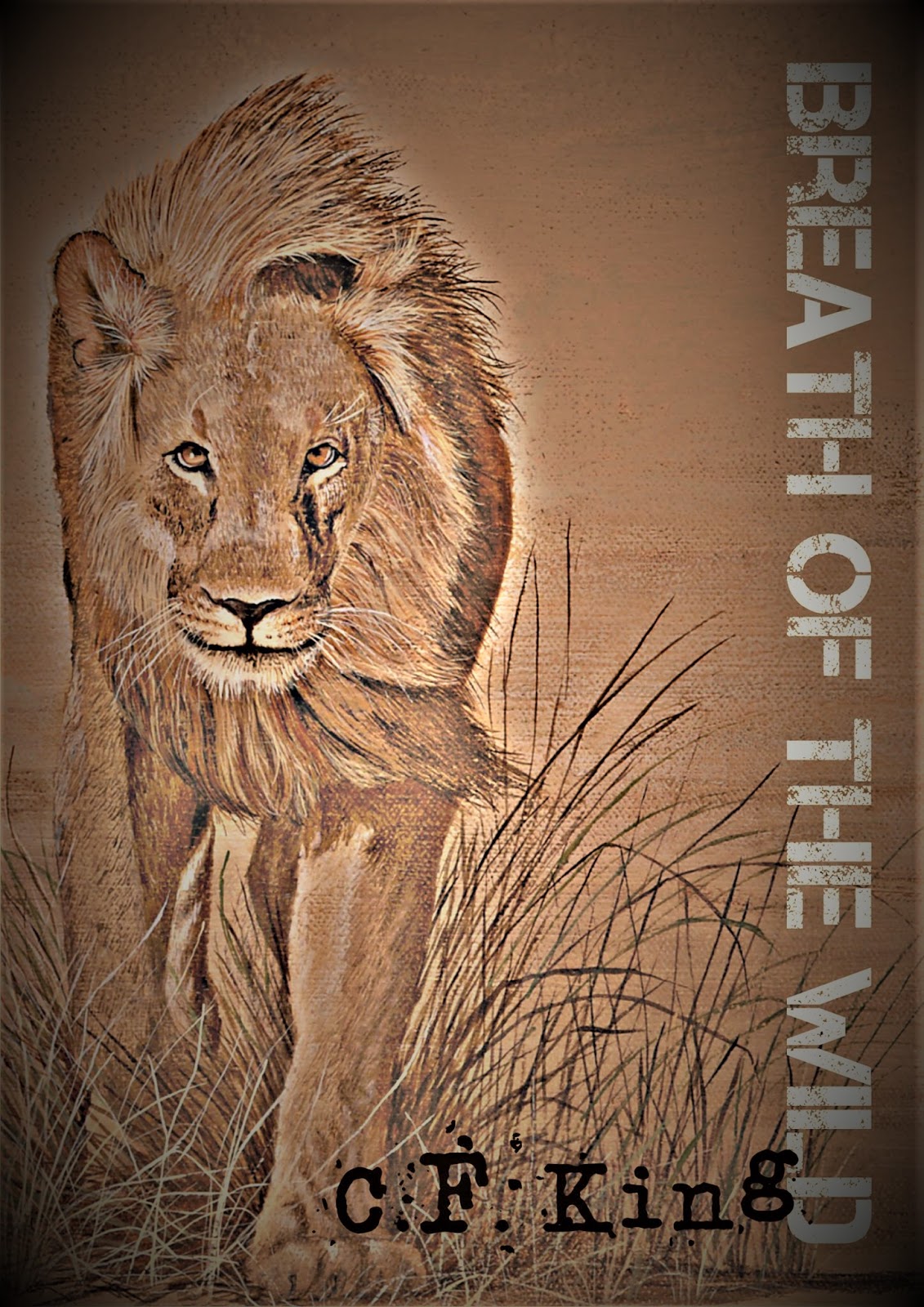
Next is Charlotte Firbank-King (C.F. King), a prolific writer and artist living in South Africa. She’s been editing and ghostwriting for Inspiration for Writers for about fifteen years. Here are a few of her own books.


Cape of Storms, 1872.

A spoilt liberal English girl arrives in the Cape Colony ready to take off into Africa. No one has ever thwarted her, until she meets her father’s taciturn wine estate manager.

Dara, the headstrong English suffragette arrives in the Calvinistic Cape Colony like a whirlwind. She is a gifted photographer and finds trouble the moment she sets foot in Africa. Her outspoken opinions set her at odds with the hardworking, reclusive Oran, who manages her father’s two wine estates in Stellenbosch.


Dara’s ailing father, in England, asked Oran to take her on a photographic safari. Oran readily agreed to his mentor’s request, until he met her. Not only is Dara irresistibly beautiful, but she’s contentious and a magnet for trouble. Claiming it’s inappropriate to spend months alone with Dara, Oran delays the trip for reasons that don’t suit her. Then events take an unexpected turn for both of them and Dara takes off with only her maid. She heads into the savage interior with no idea of how to survive the vast African wilderness. Oran chases after her from the Cape Colony to the Kimberly diamond fields, then to Zululand—a kingdom in turmoil as their new king, Cetshwayo, is crowned. Even here, Dara manages to find deadly trouble.


Hanoverian England, 1745 and the second Jacobite uprising. A man is so driven by revenge and righteous anger that the line between good and evil becomes blurred.


Marquis Blake de Montfort’s life is dark and his past violent. He is haunted by a murdered wife and child and obsessed with avenging their deaths. He ceases to care what separates good from evil as he walks his twilight path. Blake is the most powerful man at court, but his power is not vested in parliament—it’s more insidious. He’s a ruthless spymaster, hated by men, desired by women, and feared by all.

Blake is forced to marry Tanisha Ashburn, who unwittingly draws him from his path of destruction, but she has no idea she’s surrendered her life to intrigue, the lusts of men, and finally, betrayal.


There is no way to control a truly fiery free-spirit, except to crush it or risk burning with desire in the flames.


Against the Victorian backdrop of Impressionism and the awakening of women’s rights, the naïve Calla is a free-spirited, wild artist. Orphaned as a child and reared by the aged but liberal Earl of Felton, Calla has never known restraint, social or otherwise—until he dies.

Fire meets ice. Ryder is a lieutenant colonel ruled by discipline. From infancy, he has never known anything except restraint. Forced to leave his military career to take on the responsibility of a title, Ryder chooses a worthy lady to marry, but he is unprepared for the added responsibility of a ward, much less the lovely, unruly Calla. Determined to see her subdued and suitably married off, Ryder’s ordered life unravels in his pursuit to control her.


Cape of Storms, Africa, 1853. A harsh society, not a good place or time to be born a bastard.

One man takes Roark’s identity before birth. Those meant to nurture him shroud his life in secrets, abuse his body and break his spirit, until pride and his love for Tavia are all that remain. Then they tear away his love. The only recourse of a baseborn child, now a dangerous man, is revenge.


Next on the list, we have Eric Fritzius, Inspiration for Writers' technical and website guru--as well as a prolific writer, editor, playwright, audiobook narrator, graphics designer, ebook formatter, and actor. His keen sense of humor keeps us all smiling, and his stories of the unknown keep us awake at night.

A CONSTERNATION OF MONSTERS  A collection of 10 short stories of monsters and the paranormal in the tradition of the Twilight Zone, available in print ($12.99), ebook ($5.99), and audiobook ($14.95) formats. (Hear a SAMPLE)  


Other books narrated by Eric Fritzius:


MISSISSIPPI NIGHTS by D.M. Webb, narrated by Eric Fritzius — A Christian romantic thriller that tells a story of one firefighter's struggles overcoming pain and addiction, which affect not only himself but those around him—especially his new love.  Audiobook available from AmazonAudible, and iTunes.  (Hear a SAMPLE)

HOW TO CARRY BIGFOOT HOME by Chris Tarry, narrated by Eric Fritzius — a collection of adult literary fiction featuring settings and characters both grounded and fantastical, with equal parts comedy and often harrowing drama.  Audiobook available from AmazonAudible, and iTunes.  (Hear a SAMPLE)


THE BLACK STAR OF KINGSTON by S.D. Smith, read by Eric Fritzius — A middle grade adventure novel featuring rabbits with swords. This is the first part of Smith's Tales of Old Natalia, which is a prequel series to his Green Ember series of novels.  

Audiobook available from AmazonAudible, and iTunes.  (Hear a SAMPLE)

THE LAST ARCHER by S.D. Smith, read by Eric Fritzius — A middle grade adventure novel featuring rabbits with swords as well as bows and arrows.  A side-story set during the events of Smith’s Green Ember main series. Audiobook available from AmazonAudible, and iTunes.  (Hear a SAMPLE)


I know what you’re thinking: Where are the romances? No worries. Sandi Rog has you covered for sweet romances that have just the right amount of heartache. Sandi was the first editor to join Inspiration for Writers, way back in its early days—like maybe 1999? (But who’s counting? 😉) Sandi is also a prolific writer and editor, and is the founder of Tulpen Publishing, a Christian traditional publishing company.

By the way, Out of the Ashes won FIRST PLACE in the FHL Reader's Choice Awards. This was a prestigious contest (as they are associated with RWA) and not a popularity contest, so we’re really proud of her! 


by Sandi Rog

A stranger. A kiss. A shotgun wedding.

NATHANIEL WARD, a wealthy entrepreneur, needs a wife. But he’s not interested in the preening, high-society women who are offered to him on a silver platter. He wants one woman, and one woman alone: the girl who gave him all the money in her reticule years ago when the Great Chicago Fire left him destitute. He sets out to find this woman and discovers she’s unattached. There’s only one problem: a shotgun wedding may be able to bind them, but will he ever be able to win her heart?

AMELIA E. TAYLOR blows a kiss to a street rat. Little did she know, years later that kiss would follow her to Green Pines Colorado. When a handsome stranger arrives in her hometown, she guards her heart from the stirrings this man ignites. Despite society’s disapproval of spinsterhood, she is determined not to marry, having witnessed first-hand the lack of love and the horrors that accompany marriage. But will a shotgun wedding reveal blessings that arise out of the ashes?


Next is Jessica Nelson, intern/editor/social media go-to-girl for IFW since 2014. Her prose poem I Am Not a Poet can be found in the Anthology of Appalachian Writers, Vol. VII, Homer Hickam Edition and her poem Irish Road Bowling (based on an old Irish sport that the men in her family have dragged her all over the state of West Virginia to play) is featured in the Anthology of AppalachianWriters, Vol. X, Wiley Cash Edition. The volumes also contain the works of respected writers such as Marc Harshman (poet laureate of West Virginia), Randi Ward, M. Lynne Squires, Anna Egan Smucker, and Natalie Sypolt. These anthologies are perfect for the readers in your life who love poetry and prose both but just can’t get through a full-length novel. (Photo credit: Wiley Cash.)


Last, but most certainly not least, we present Geoffrey Cameron Fuller, a New York Times best-selling author--and an editor and ghostwriter for IFW. He is the author or co-author of five books, including Full Bone Moon (a work of fiction inspired by the infamous WVU co-ed murders of the 1970s, which can be accompanied by his podcast about the real case), and his writing is credited in another dozen books.

Geoff recently teamed with Daleen Berry (Sister of Silence) to write about the stabbing murder of high school honor student Skylar Neese by her two best friends. Their work resulted in two books, The Savage Murder of Skylar Neese (BenBella Books; February 2014) and Pretty Little Killers: The Truth Behind the Savage Murder of Skylar Neese (BenBella Books; July, 2014). The crime and the books were featured on Dateline (NBC), Dr. Phil (NBC), 20/20 (ABC), and I Killed My BFF (Lifetime). The Savage Murder of Skylar Neese peaked at #12 on the New York Times bestseller list, and the second book, released in July, 2014, is also selling well.


Thanks for reviewing our books. Remember, we are always here to help you write or edit your own books. Just email us at IFWeditors@gmail.com. The first sample edit is free!

Monday, February 12, 2018

To Prologue or Not to Prologue?

by
Jessica Nelson


You’ve sat down at the computer, or with your pen and paper, and started to write. The scene is set in your mind and the words are flowing onto the page. After all that beautiful prose is complete, you realize that this is the beginning of your book—but it’s not where your story starts. So you slap the word “prologue” above what you’ve written and move on to chapter one.

Or, you’re getting ready to send your novel out to publishers, and you realize your first chapter is a little slow, so you pull out a scene from the middle or the end of your book—one filled with tension and action and suspense—and put it at the beginning to hook the reader and make them want to keep reading, and you call it the prologue.

But do you really need that prologue?

I remember reading a claim recently that most readers skip over the prologue and jump straight into chapter one. I tried to find verification for that claim, but couldn’t find anything official. What I did find was a pretty heated debate not only about whether people read the prologue, but also about whether prologues should even be used.

Let’s deal with the first question: Does anyone read the prologue?

There seems to be two diametrically opposed groups. One group insists that reading the prologue is essential. Why would the writer bother with the prologue if it wasn’t meant to be read?

The other group believes if the information in the prologue was important, then that information would appear in the meat of the story (chapter one or onward).

I personally always read the prologue. But I admit to being disappointed when the prologue is nothing more than a scene from later in the book meant to catch the reader’s attention. Especially when that scene is a word-for-word excerpt.

According to Sandy Tritt, “For the past several years, publishers and agents have shied away from prologues. They say readers don't read [prologues], so just start your book with chapter one and be done with it. The problem with many [prologues] is they simply don't capture our attention and hold it. Which is a killer for any book. So, my professional opinion is to avoid prologues (because agents and publishers have said so).”

However, Tritt acknowledges that sometimes a prologue is useful, and she has read well-done prologues and even used prologues herself.

So now we address the second question: When is a prologue effective?

An effective prologue . . .

1. . . . adds important contextual or historical background. In fantasy or science-fiction, a prologue may set up the culture and customs of the world so the forward action of the story isn’t bogged down by background information.1 In historical fiction, the prologue may introduce a particular historic event around with the story revolves or it may introduce the time period to give the rest of the story the appropriate context.2 Clive Cussler does an excellent job with this type of prologue. Cussler often includes a prologue that introduces a historical event that relates to the main conflict of the story. However, there is a fine line between effective and ineffective with this type of prologue. Tritt says, “If I wanted to give an information dump describing why my characters do what they do or to inform about an unusual setting, I would not use a prologue.”

2. . . . allows for narration from a point of view that won’t be used again. This is generally seen in mystery or crime fiction, where the prologue will be written from the point of view of the killer or the victim.3 Regarding viewpoint, Tritt says, “If you are using a full-circle plot, your first chapter and your last chapter should be in the viewpoint of the same character. Yet if something from the past and from a different character's viewpoint needs presented in real-time, then I would use a prologue to act out that scene. Alternately, if your story presents only one viewpoint throughout, yet something that happened previously in a different viewpoint needs acted out, then I would use a prologue for that scene.”

3. . . . is a scene that occurs before the starting action of the story. According to Tritt, “If the prologue contains a scene that happened prior to the main storyline of the book and it still has a bearing on the characters, and it is written with dialogue and action that holds the reader's attention, I don't have a problem with a prologue.” Sometimes this is the inciting event—the moment that sets the rest of the story in motion—but that event may occur months or years before the starting action of the story. A prologue allows the writer to introduce the inciting event without needing to add it later as a flashback or try to work it in to a revealing dialogue exchange.

An ineffective prologue . . .

1. . . . takes a scene word-for-word from somewhere else in the novel. This is usually an attempt to grab the reader’s attention when the writer isn’t confident their first chapter will capture and maintain the reader’s interest.4

2. . . . creates a general atmosphere but does not add any information about the world of the story and/or does not include any action that effects the narrative.5

3. . . . contains a background information that would be more effectively presented in pieces throughout the narrative. Tritt says, “If the background information is given in a flat and uninteresting way, I strongly suggest getting rid of the prologue and find another way to slowly give the reader the background information during the natural unwinding of the plot.”

4. . . . is boring. If the prologue isn’t interesting, then it’s only detracting from your prose.

Even if you’ve written an effective prologue, there’s a still a chance your reader won’t read it and will miss out on potentially important information. We have some alternatives to prologues:

1. Can your prologue be just as effective if you made it chapter one? This is relevant mostly to prologues that contain an inciting event or a historical milestone. Charlotte Firbank-King rarely uses prologues and instead uses subtitles in her chapters to indicate if significant time has passed from chapter one to chapter two. As Firbank-King writes, “I prefer to treat the prologue as chapter one with a subtitle or date—then one can hit chapter two with another subtitle or date, like ‘5 years later,’ or ‘1066’ in chapter one and ‘1944’ in chap two. In my YA fantasy book, I have a subtitle for each chapter and chapter one is ‘The beginning.’ Chapter two has two subtitles: ‘Attack’ and then one under that on the left that reads, ‘Six summers later.’ In adult books, I’ve used dates.”

2. If your prologue is a scene from later in the story, then maybe what you need is a more interesting chapter one. You can still use the scene or excerpt as your book blurb or as bonus before chapter one (not denoted as a prologue or as any official part of the story.) The Lifeguard by Deborah Blumenthal does this. She takes a high-tension scene from near the end of the book and includes it between the title page and chapter one, but it’s not marked as a prologue or anything else. It’s a teaser available to anyone who wants to read it, but it’s not necessary to start the book.

That said, you should always assume that your reader is starting at chapter one. If chapter one doesn’t catch and hold the reader’s interest, then maybe the story hasn’t started in the right place.

3. If the prologue contains primarily background information, then an alternative to having a prologue would be to incorporate that information throughout the text. Be careful to avoid info dumps, though.

To prologue or not to prologue? That remains the question. There is no hard-and-fast rule or a one-size-fits-all solution. It largely depends on the story and the way the prologue is written and utilized. We’ll end with some advice from Tritt: “Study what is selling, study the art of writing, and then make an informed decision about how to structure your book. There is never one-way-fits-all, so don't be afraid to buck trend if you have an intelligent and necessary reason for doing so. Good luck!”


Footnotes (additional information used as inspiration or paraphrased from other sources)
 
2 Daily Writing Tips
3 Daily Writing Tips
4 McAlister, Marg, “The Prologue”
5 Daily Writing Tips

Friday, December 30, 2016

New Year's Writing Resolutions

by
Jessica Nelson


It’s an old New Year’s tradition to make a resolution for the coming year. Many people resolve to lose weight or get fit or find love or make a new career move. But we are writers, and while we may have those resolutions, we also make New Year’s resolutions about our writing. So in honor of the impending arrival of 2017 and the new beginnings it represents, I’ve compiled New Year’s Writing Resolutions from writers like you:


I am working on the two new pirate musicals (an adaptation of "Treasure Island" with a special twist and the murder mystery musical "Blackbeard's Dead Again"); a Romantic Comedy screenplay I've been hired for; co-writing a paranormal audio drama series; and adapting the The Legend of Blackbeard Tour. Also doing research for a series of historical fiction novels and an audio drama about the adventures of Angus "Quill" MacBlaquart.

~Joey Madia


I'm excited that I have more writing projects than ever before. Once my book was published, I was suddenly afraid I wouldn't have anything else to write. That turned out to be ridiculous. I found that finishing the book and seeing it published just created more space and a desire for more writing, more projects. My resolution is to write even more and it comes with more joy and a sense of "I can do this!"

 ~Cat Pleska
 
 
Finish my rewrite, snag an agent, and submit to the two editors that requested my manuscript!

~Joe Hall
 
 
1) To find a time management system that will work for me that will allow me to read more, write more and learn more while juggling my full-time job and dealing with daily life.

2) To learn as much about self-publishing as I can so I can figure out if that is the best route for me in 2017.
 
~Jennifer Jett Prezkop
 
 
- Create a regular weekly schedule to write.
- Finish my second novel and have an audiobook produced for this and my debut novel.
- Send a regular newsletter to the readers on my mailing list.
- Publish the meditation book that’s been done for six months now.
- Make more time for reading.
- Polish public speaking skills and actively pursuing speaking gigs.
- Make 2017 the year I write for a living!
 
 ~Eric Vance Walton
 
 
My resolution for 2017: I resolve to be more productive in 2017. How? By erasing the time-wasters--the distractions. I'm pretty sure I could've written a novel or two (okay, at least a darned good short story) during the amount of time I've spent visiting Facebook (and I GREATLY limit my Facebook time now); clicking on emails that link to ads for exciting new products or spew opinion on politics, religion, sports, you-name-it; and browsing through blogs and Internet stories. So, my resolution is to limit all such browsing and socializing and gawking to Sunday afternoons. Of course, I will continue to follow those blogs that give me fresh perspective on my writing life and I will continue to do research as necessary. It's the flashing ads and links to which I want to "just say no." If while doing valid research or professional study I find something unrelated that is just too compelling to ignore, I will copy the link and put it in my "Sunday Browsing File." There are so many, many distractions in our lives, and if we could find a way to control them, we'd be much more productive both in getting our work done and in exercising our creativity. This is a way I can reclaim squandered time. So be it.
 
~Sandy Tritt
 
 
I’m going to finish a story. That may seem obvious, but I’m terrible about starting a dozen stories and never finishing them. Sometimes it’s because I hit a scene that just won’t work the way I need it to, so I walk away for a while and never come back. Sometimes the passion for the story just fades out. Sometimes I get overwhelmed by the amount of work a story will take to complete so I just never work on it. But in 2017 I will finish at least one of the stories I have started. (And hopefully get one published, too!)

~Jessica Nelson
 
I want to submit at least 10 short stories to 10 Literary Magazines in 2017. I want to complete my book of essays by year's end. I also want to continue thinking about creating an interesting writing blog and finally having a social media presence. Go on a writing retreat somewhere interesting. 
 
~Vicki Crawford
 
 
Since I have proven that I cannot commit to writing every day (outside of work), I am going to shoot for once a week. My ultimate goal is to have a rough draft manuscript finished by the end of 2017. 

Another goal of mine is to read more this year. I think I finished five books total in 2016, which is pathetic. Haha. I hope this will help inspire my writing.

~Samantha Cart
 
 
To finally get back in the habit of writing for fun and not just for class.
 
~Abby Hall
 
 
I finished a fiction thriller manuscript featuring Cleveland Police Dept. Homicide detective titled "Code for Murder." I'm now working on a sequel to "Fragile Brilliance" which I hope to have finished by the end of the summer.
 
~Eliot Parker
 
My New Years writing resolution is to practice writing short stories--I always write poetry or novels. I want to try to expand my horizons.
 
~Stacy Chrise-Tritt


Whatever your New Year’s resolution—writing related or not—we at Inspiration for Writers, Inc. wish you a happy and successful 2017. If you need help making your writing resolution a reality, you can always find us at our website, our Facebook page, or email us at ifweditor@gmail.com. Happy New Year!

Thursday, November 3, 2016

The Imitation Game

by
Eric Fritzius
 
 
As writers, finding inspiration to write can be a problem.  Perhaps we have a piece we’ve been working on for some time and it’s hit a wall.  We find ourselves at a loss for how to climb over that wall.  The very act of sitting down and staring at the paper (or screen, as these things go) can feel like the last thing we would ever want to do—no matter how many writers in the past have advised us to do precisely that.  My usual tactic to punch through such “blocks” is to turn to other creative projects, to work on something else for a while and get the creative juices flowing.  This can help with the wall-breaching process for the first project.  And when it doesn’t, at least I’ve been productive on another project.  If you don’t have another project ready at hand (or even if you do) you might consider another technique: inspiration by imitation. 

This is the point where many of you will be put off if not horrified by the idea of imitating the work of another writer as inspiration for your own work; writers often bristle at the notion that they are anything less than completely original in all output.  This is, of course, the fecal byproduct of a horse.  We learn through imitation in all aspects of life, but particularly in writing.  Don’t believe me?  Go back and have a gander at your earliest output and you’ll likely find a pale version of Janet Evanovich staring back at you (or, for me, Douglas Adams).  As the writer Voltaire once said, though: “Originality is nothing but judicious imitation.  The most original writers borrowed from one another.  The instruction we find in books is like fire.  We fetch it from our neighbors, kindle it at home, communicate it to others, and it becomes the property of all.” Even in the face of the words of a learned master, we resist the notion.  Plagiarism is, after all, a truly vulgar crime, and writing something that another person might point a finger at and say “that’s someone else’s idea” can fill us with dread.  Plagiarism is also not what I’m talking about.  I'm talking about imitation, not theft.

In the creative writing classes I regularly teach, imitation is part of the curriculum.  I direct my students to pieces of writing that contain, at their core, a universal concept that can be applied not only to the original author’s life, but to the lives of each and every person walking the planet.  The concept can be rewritten, customized to the life and experiences of a new writer and will produce an outcome that is completely different from the original, yet retain the basic format. 

For instance, there’s a wonderful prose piece called The Things I’ve Lost” by writer Brian Arundel.  It’s one that is included in the text book I use for my class, The Practice of Creative Writing by Heather Sellers.  (Full disclosure, Ms. Sellers is the one who hipped me to the Voltaire quote above.  Hers is an excellent text on writing.) 

Please go now and read “The Things I’ve Lost” online.

Back?

Pretty awesome, wasn’t it?  In fact, it’s the sort of piece that should make you mad that you didn’t think of it first, because it’s so simple and perfect in concept, yet easily lends itself to nuance.  Mr. Arundel does a fine job of listing off actual physical items he has misplaced throughout his life, alongside observations of beliefs, ideals, illusions, and opportunities he’s similarly “lost” or abandoned along the way.  It becomes an autobiographical sketch of major aspects of his life in six paragraphs.  And I found it to be the kind of piece that, when I first read it, I wanted to get to the end of it quickly so I could rush away and start my own version because it just seemed like it would be fun to do so.  My students almost always choose to write their own versions too.  And because I’m generally a positive person, I also invite them to try their hand at a similar topic called “The Things I’ve Found.”  Both produce impressive results. Each is completely original while at the same time using Arundel’s basic format as its basis.

There are thousands of other pieces of writing out there that this technique be applied to as well.  You may find you start to see such opportunities without even looking for them.  However, another that Heather Sellers specifically cites for this treatment is the poem “Genealogy” by Betsy Sholl.  It’s another concept that we can each plug our own details into, re-configuring the format as we see fit. 

Imitation is, if nothing else, a great technique for writing warm-ups. You may find it can help in breaking through your creative blocks as well.  And, if not, you have at least been productive.  

Sellers' book includes other techniques for imitation games, such as using poems as scaffolding for producing new work.  I have not found this to be effective in my own writing, but your mileage may vary.

Now, if you still feel at odds with borrowing the format and ideas of another writer, you’re always welcome to credit them.  Poets and writers often include an (after…) parenthetical in their title to indicate the work they’re responding to, or by which they were inspired. 

I wish you impressive results.