Showing posts with label writing. Show all posts

Tuesday, November 21, 2023

Time Marches On - Get your discount on editing services NOW

Why is it that every time I blink, another month has passed? When I glance back at the previous month, I am pleased with some accomplishments. Yet, I am nagged by some things I've let slide--like working on my own writing. Fortunately, every time I return to the novel I've been working on for years(!), I still feel that passion to complete it. These characters live in my heart and mind every bit as much as many "real" people do. They continue to amuse me, frustrate me, and challenge me. 

What is it you let slide? Do you make your personal writing a priority? Do you let too many days, weeks, months go between those late nights when you still feverishly work on it? I certainly cannot judge. I am guilty. 

I am also not getting any younger. The daily obituary column lists as many or more who are younger than me than older. What if that grim reaper shows up and I haven't finished my life's work? 

We aren't guaranteed any tomorrows. We need to do what is important today, not "later." Today

How many people do you know who also suffer from procrastination? Would you like to help yourself or gift your friends/family with a bit of inspiration? 

We are offering GIFT CERTIFICATES for 10% off until the end of November 2023. You can use these on your own work or you can gift them to others. We can custom create them for you and mail or email directly to the recipient. They will have a FIVE YEAR expiration date. These gift certificates are valid for any of our services--editing, ghostwriting, developmental editing, coaching, proofreading--including any of our services we custom design for your needs.

So, chase off those excuses and DO SOMETHING. Email me at IFWeditors@gmail.com for questions or more information. 

Time is of the essence. 

Wednesday, January 1, 2020

2020 New Year's Resolutions


by
IFW editors


2019 has come and gone. Some of us are sad to say goodbye to a year filled with blessings; some of us are glad to say “See ya!” to a year of tribulations. With the new year comes a clean slate—a blank page, if you will—and the chance to write the next chapter in our lives.

Some of our editors here at IFW have elected to share their New Year’s resolutions. Perhaps they’ll inspire some resolutions of your own—or you can inspire us with your 2020 goals in the comments!

Charl Firbank-King: My “NO” button is broken­—I’m incapable of saying no—so I’m going to fix it.

Rhonda Browning White: I’ve given this New Year’s resolution thing a bit more thought this year, and I have a different take on it than before. I mean, why do we have to resolve to make a marked change on the first day of the year, only to (typically) falter or fail weeks or months later? I mean, theres enough pressure just to write 2020 instead of 2019, right?

I wonder, why is it that we don’t make resolutions on other days of the year? Our birthdays, for example, seem the perfect time for improvement, considering that’s our personal New Year. Or we can resolve to be more loving on Valentine’s Day, or to make a new beginning on Easter Sunday or the first day of spring. As writers, we can resolve to sit down and write today, the very day we put pen to paper or fingers to keyboard. And we can make that same resolution again tomorrow, and the day after that. And we can skip a day (or three), and resolve again when inspiration (or deadline) strikes.

So, I guess what I’m saying is that I am making a new resolution: I’m resolving to resolve to make positive changes on a more frequent basis. And, instead of waiting for New Year’s Day, I’m going to start right now.

Will you join me?

Eric Fritzius: People often fail at keeping resolutions because they shoot at too far a target.  Oooh, I’m gonna exercise every day and lose 50 lbs!  Oooh, I’m gonna keep my office clean and be super productive this year!  Oooh, I’m gonna solve the Riemann Hypothesis!  These sorts of things rarely work out so well.  No, I like to aim at targets that are far more immediately achievable.  I march into the laundry room and announce: “I resolve that I’m gonna find a way to get the cat food dish from where it fell behind the washer, four months back.”  I then go find a magnet and some string and I bob around back there until I come up with cat dish.  I then resolve to celebrate this achieved resolution, possibly with a Reese cup or a libation or possibly both, depending on my proximity to 5 o’clock.  And I move on to resolving to build a little fence that will prevent the cat from knocking his bowl behind the washer anymore.  See, you can knock out two of three small resolutions like that in an afternoon and feel genuinely good about yourself.

Jessica Nelson: As much as I probably need to resolve to hit the gym and eat healthier, I think my resolution for 2020 is to be more mindful of how I react to things. I saw this quote from Charles Swindoll early this year when it made its rounds on social media: “We cannot change the inevitable. The only thing we can do is play on the one string we have, and that is our attitude. I am convinced that life is 10% what happens to me and 90% of how I react to it. And so it is with you... we are in charge of our attitudes.” It really resonated with me. I tend to overreact, and usually in a negative way. So this year, I resolve to be more mindful of my reactions—to not catastrophize, to manage negative emotions and keep them in proportion to the situation, and consciously search for the positive when my instinct is to be pessimistic. So here’s to a more positive 2020!

Sandy Tritt: Resolutions laugh at me.  If I resolve to do or not to do something, within an hour, my resolution lies crumpled in the corner with a huge smirk on its face. Never fails.

So, instead of making a resolution, I want to try something different this year.

Twenty-twenty insinuates perfect vision. Twenty-twenty is the number of our new year. So, I am praying for vision—for the ability to see with clarity, wisdom, and insight—in 2020.  

May 2020 be your year for perfect vision—and success. Best wishes from all of us at IFW.

Sunday, November 17, 2019

Our Editors Can Write: Books from the IFW Family


Want to give the gift of reading or writing? We have you covered. First, we have gift certificates good for any our services, available in any dollar amount. If you want to truly encourage the writer in your life—or give a gift to yourself, we are offering 10% off the face value of all gift certificates ordered by December 25. Get it here!

If you or your loved one are more inclined towards reading, we have a selection of books by our Inspiration for Writers family for your enjoyment.


First up is Sandy Tritt, the founder and CEO of Inspiration for Writers, Inc. Although she normally writes fiction, her two most recent books are nonfiction. Her selections include a book for the writer in your life and one for the reader.

The PLAIN ENGLISH Writer's Workbook explains writing concepts in simple terms. It's written for fiction and memoir writers of all levels, from beginners to previously published. This workbook includes nine worksheets with detailed instructions to help you plot, create memorable characters, and edit your own work like a pro. Throughout the workbook, generous samples are given to show the right and wrong way to perform various techniques. EVERY WRITER NEEDS THIS BOOK.

LAUNDRY TO LOVE -- Everything I Know about Life.  When Sandy's oldest daughter was nearing high school graduation, Sandy suffered a major panic attack. Had she taught her daughter everything she needed to know? Had she shared the family recipes? Did her daughter understand the ethics she wanted to pass along? Sandy made notes all the things her daughters would need to know, then organized them by topic. As she cooked, she measured the pinches and pours and created recipes. Described as a marriage of Robert Fulghum and Martha Stewart, Laundry to Love gives practical hints, creative solutions, and unique outlooks on life (as well as 66 favorite family recipes)—a handbook for young women and men as they step out on their own. Perfect as a graduation or wedding gift, this book is also excellent for anyone who enjoys a fresh perspective sprinkled with a little humor. Laundry to Love is the life instruction book you didn't get. Until now.


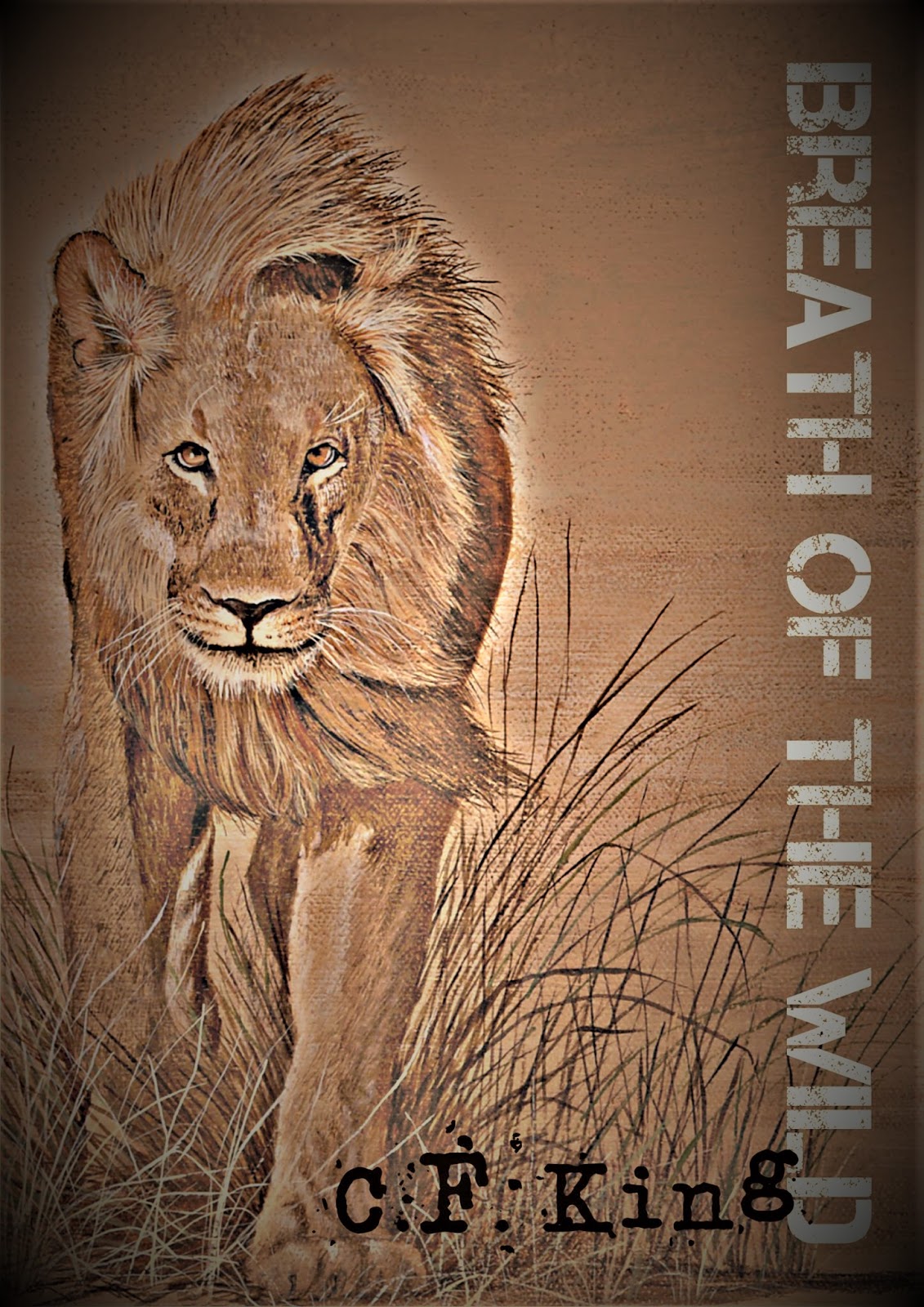
Next is Charlotte Firbank-King (C.F. King), a prolific writer and artist living in South Africa. She’s been editing and ghostwriting for Inspiration for Writers for about fifteen years. Here are a few of her own books. 


Cape of Storms, 1872.

A spoilt liberal English girl arrives in the Cape Colony ready to take off into Africa. No one has ever thwarted her, until she meets her father's taciturn wine estate manager. 

Dara, the headstrong English suffragette arrive in the Calvinistic Cape Colony like a whirlwind. She is a gifted photographer and finds trouble the moment she sets foot in Africa. Her outspoken opinions set her at odds with the hardworking, reclusive Oran, who manages her father's two wine estates in Stellenbosch. 

Dara's ailing father, in England, asked Oran to take her on a photographic safari. Oran readily agreed to his mentor's request, until he met her. Not only is Dara irresistibly beautiful, but she's contentious and a magnet for trouble. Claiming it's inappropriate to spend months alone with Dara, Oran delays the trip for reasons that don't suit her. Then events take an unexpected turn for both of them and Dara takes off with only her maid. She heads into the savage interior with no idea of how to survive the vast African wilderness. Oran chases after her from the Cape Colony to the Kimberly diamond fields, then to Zululand -- a kingdom in turmoil as their new king, Cetshwayo, is crowned. Even here, Dara manages to find deadly trouble.  


Hanoverian England, 1745 and the second Jacobite uprising. A man is so driven by revenge and righteous anger that the line between good and evil becomes blurred.

Marquis Blake de Montfort's life is dark and his past violent. He is haunted by a murdered wife and child and obsessed with avenging their deaths. He ceases to care what separates good from evil as he walks his twilight path. Blake is the most powerful man at court, but his power is not vested in parliament -- it's more insidious. He's a ruthless spymaster, hated by men, desired by women, and feared by all.

Blake is forced to marry Tanisha Ashburn, who unwittingly draws him from his path of destruction, but she has no idea she's surrendered her life to intrigue, the lusts of men, and finally, betrayal. 


There is no way to control a truly fiery free-spirit, except to crush it or risk burning with desire in the flames.

Against the Victorian backdrop of Impressionism and the awakening of women's rights, the naive Calla is a free-spirited, wild artist. Orphaned as a child and reared by the aged but liberal Earl of Felton, Calla has never known restraint, social or otherwise -- until he dies.

Fire meets ice. Ryder is a lieutenant colonel ruled by discipline. From infancy, he has never known anything except restraint. Forced to leave his military career to take on the responsibility of a title, Ryder chooses a worthy lady to marry, but his is unprepared  for the added responsibility of a ward, much less the lovely, unruly Calla. Determined to see her subdued and suitably married off, Ryder's ordered life unravels in his pursuit to control her.


Cape of Storms, Africa, 1853. A harsh society, not a good place or time to be born a bastard.

One man takes Roark's identity before birth. Those meant to nurture him shroud his life in secrets, abuse his body and break his spirit, until pride and his love for Tavia are all that remain. Then they tear away his love. The only recourse of a baseborn child, now a dangerous man, is revenge.


Next on the list, we have Eric Fritzius, Inspiration for Writers' technical and website guru--as well as a prolific writer, editor, playwright, audiobook narrator, graphics designer, ebook formatter, and actor. His keen sense of humor keeps us all smiling, and his stories of the unknown keep us awake at night.


A CONSTERNATION OF MONSTERS  A collection of 10 short stories of monsters and the paranormal in the tradition of the Twilight Zone, available in print ($12.99), ebook ($5.99), and audiobook ($14.95) formats. (Hear a SAMPLE)  

West Virginia Writers, Inc., proudly presents Writerly Advice, a series of lessons offering tips, tricks, and inspiration for writers of all skill levels and genres, written by over 20 talented member of West Virginia Writers, Inc., including a chapter by Eric himself.

Other books narrated by Eric Fritzius:


MISSISSIPPI NIGHTS by D.M. Webb, narrated by Eric Fritzius — A Christian romantic thriller that tells a story of one firefighter's struggles overcoming pain and addiction, which affect not only himself but those around him—especially his new love.  Audiobook available from AmazonAudible, and iTunes.  (Hear a SAMPLE)

HOW TO CARRY BIGFOOT HOME by Chris Tarry, narrated by Eric Fritzius — a collection of adult literary fiction featuring settings and characters both grounded and fantastical, with equal parts comedy and often harrowing drama.  Audiobook available from AmazonAudible, and iTunes.  (Hear a SAMPLE)


THE BLACK STAR OF KINGSTON by S.D. Smith, read by Eric Fritzius — A middle grade adventure novel featuring rabbits with swords. This is the first part of Smith's Tales of Old Natalia, which is a prequel series to his Green Ember series of novels.  

Audiobook available from AmazonAudible, and iTunes.  (Hear a SAMPLE)

THE LAST ARCHER by S.D. Smith, read by Eric Fritzius — A middle grade adventure novel featuring rabbits with swords as well as bows and arrows.  A side-story set during the events of Smith’s Green Ember main series. Audiobook available from AmazonAudible, and iTunes.  (Hear a SAMPLE)


THE WRECK AND RISE OF WHITSON MARINER is the second installment of S.D. Smith's Green Ember prequel series, Tales of Old Natalia, and the sequel to The Blackstar of Kingston.
Available from Amazon and Audible. (Hear a SAMPLE.)


I know what you’re thinking: Where are the romances? No worries. Sandi Rog has you covered for sweet romances that have just the right amount of heartache. Sandi was the first editor to join Inspiration for Writers, way back in its early days—like maybe 1999? (But who’s counting? 😉) Sandi is also a prolific writer and editor, and is the founder of Tulpen Publishing, a Christian traditional publishing company.

By the way, Out of the Ashes won FIRST PLACE in the FHL Reader's Choice Awards. This was a prestigious contest (as they are associated with RWA) and not a popularity contest, so we’re really proud of her! 


by Sandi Rog

A stranger. A kiss. A shotgun wedding.

NATHANIEL WARD, a wealthy entrepreneur, needs a wife. But he’s not interested in the preening, high-society women who are offered to him on a silver platter. He wants one woman, and one woman alone: the girl who gave him all the money in her reticule years ago when the Great Chicago Fire left him destitute. He sets out to find this woman and discovers she’s unattached. There’s only one problem: a shotgun wedding may be able to bind them, but will he ever be able to win her heart?

AMELIA E. TAYLOR blows a kiss to a street rat. Little did she know, years later that kiss would follow her to Green Pines Colorado. When a handsome stranger arrives in her hometown, she guards her heart from the stirrings this man ignites. Despite society’s disapproval of spinsterhood, she is determined not to marry, having witnessed first-hand the lack of love and the horrors that accompany marriage. But will a shotgun wedding reveal blessings that arise out of the ashes?


Next is Jessica Nelson, intern/editor/social media go-to-girl for IFW since 2014. Her prose poem I Am Not a Poet can be found in the Anthology of Appalachian Writers, Vol. VII, Homer Hickam Edition and her poem Irish Road Bowling (based on an old Irish sport that the men in her family have dragged her all over the state of West Virginia to play) is featured in the Anthology of AppalachianWriters, Vol. X, Wiley Cash Edition. The volumes also contain the works of respected writers such as Marc Harshman (poet laureate of West Virginia), Randi Ward, M. Lynne Squires, Anna Egan Smucker, and Natalie Sypolt. These anthologies are perfect for the readers in your life who love poetry and prose both but just can’t get through a full-length novel. (Photo credit: Wiley Cash.) 

For the readers in your life who may not have the patience for a full novel or prefer the potato chip-addictiveness of short stories, look no further than our own Rhonda Browning White! In addition to her work with IFW as a ghostwriter and editor, her writing appears in Qu Literary Journal, Hospital Drive, HeartWood Literary Review, Bellevue Literary Review, Steel Toe Review, Ploughshares, Writing Lessons, Tiny Text, NewPages, South 85 Journal, The Skinny Poetry Journal, WV Executive, Mountain Echoes, Gambit, Justus Roux, Bluestone Review, and the anthologies Ice Cream Secrets, Appalachia's Last Stand, and Mountain Voices. You can find even more on her Read. Write. Live! blog. Make sure to check out her work! 

Her book The Lightness of Water of Other Stories is the winner of the 2019 Press 53 Award for Short Fiction. The characters in these emotionally charged stories deal with loneliness, loss, greed, and guilt. They, like all of us, wrestle with the people, places, and memories they cling to, belong to, and run from, learning (sometimes too late) that these experiences remain with them forever. The stories in The Lightness of Water and Other Stories are bound by a strong sense of place -- Appalachia and the South -- and prove that no matter where we go, there's no place far enough to leave home behind. 


Last, but most certainly not least, we present Geoffrey Cameron Fuller, a New York Times best-selling author--and an editor and ghostwriter for IFW. He is the author or co-author of five books, including Full Bone Moon (a work of fiction inspired by the infamous WVU co-ed murders of the 1970s, which can be accompanied by his podcast about the real case), and his writing is credited in another dozen books.    

Geoff recently teamed with Daleen Berry (Sister of Silence) to write about the stabbing murder of high school honor student Skylar Neese by her two best friends. Their  work resulted in two books, The Savage Murder of Skylar Neese (BenBella Books; February 2014) and Pretty Little Killers: The Truth Behind the Savage Murder of Skylar Neese (BenBella Books; July 2014). The crime and the books were featured on Dateline (NBC), Dr. Phil (NBC), 20/20 (ABC), and I Killed My BFF (Lifetime). The Savage Murder of Skylar Neese peaked at #12 on the New York Times bestseller list, and the second book, released in July 2014, is also selling well.

Thanks for reviewing our books. Remember, we are always here to help you write or edit your own books, and from now until December 25, gift certificates for our services are 10% off. Just email IFWeditors@gmail.com. The first sample edit is free!

Wednesday, April 3, 2019

Rekindling our Passion

by Sandy Tritt


Passion. You remember what that feels like, right? When suddenly the world becomes brighter, clearer—like you’ve been living in a black-and-white two-dimensional world and suddenly wake up to brilliant colors in three dimensions. 

Whew! It’s exciting. Whether the object of our passion is a person, religion, organization, hobby—whatever—it’s as though our entire world brightens.

And time? Time no longer exists—as long as we're involved with our passion. Hours disappear in what seems like minutes. Nothing matters except being with our passion.

Yes. Sweet, sweet passion.

And passion not only changes how we view things, it changes how others view us. When we are passionate, others are drawn to us. They feel our excitement, admire our determination, and want to be near the energy our passion generates.

I remember when I was passionate about writing. Nothing could stop me from doing it. I wrote late into the night. I wrote during my lunch break at work. I wrote while stirring spaghetti sauce. I wrote every day. Even though I managed to hold down a demanding career—while also being a wife, mother and housekeeper—the fire of my passion ran hot through my veins and never dissipated.

Until one day, it did.

I’m not sure when it happened. Life is tough, and we deal with a myriad of situations. Growing children. Work problems. Financial difficulties. Marital issues. Aging parents. Health issues. People we love die. It goes on and on. There’s always something to throw water on our flame.  

Yet . . . I’ve always believed that if we’re given a passion to do something, we should do it. It’s our calling in life. We never know when our time on earth will be up. What if we spend our entire lives putting aside our passion to deal with other stuff? What if a bit of depression steals our energy and we get bogged down with just trying to survive? What if we allow our passion to die, taking us along with it?

Fortunately, I am blessed with good friends. They noticed my flame going out. They called me on it. “Why aren’t you working on your novel?” they asked. “Why haven’t you finished that thing yet?”

Oh, I had excuses. Plenty of them. “I don’t have time,” I complained. “My eyes are tired after a long day of work.”

“Send me what you have,” my close friend and co-worker Charl insisted. “Let me help you.” She looked at my novel with fresh eyes, making suggestions, asking questions, adding details.

And something in me stirred. My heart beat a little faster. I wanted to start working on my novel again. I really did. But when? My schedule was already overfull.

More than twenty years ago, when I first started Inspiration for Writers, I had problems with time management. It seemed like I was constantly working, yet I didn't get as much done as I thought I should’ve. My writer friend Rhonda explained how she had set office hours for her work-from-home business. When she was in her home office, she worked only on writing and editing and refused interruptions. And when her workday was done, she closed her computer and didn’t look back. I adopted those policies and found I was not only more productive, but I also had another life, a non-working life.

Of course, work on my own writing was always at the bottom of my to-do list, somewhere after rearranging the alphabet and solving killer sudoku puzzles, so it never happened. But maybe, if I changed my priorities a bit, I could find some time?

I spent a weekend with my novel. My pulse quickened and my energy levels grew. Like discovering the fountain of youth, my heart beat happiness into every cell of my body.

My passion was still there!

That little spark caught hold and soon the fire glowed hot. My thoughts returned to the characters I loved, the story that intrigued me—the story that no one but me could tell, the story I was meant to write.

Better yet, passion creates energy. I needed less sleep, so I had more hours in the day. More importantly, I had more energy.

My passion was back!

I tightened my schedule, eliminated a few time-drains, and reserved an hour a day to spend on me—and sometimes more on weekends. Just me. Just me and my passion.

What about you? Has life taken the heat out of your passion? Have you abandoned your writing because there’s not enough time in a day? Have you allowed your purpose in life to linger at the bottom of your to-do list?  

Email us at IFWeditors@gmail.com. We can help. We offer a free sample edit or consultation to help you rediscover the passion that once energized your life.

And we give away encouragement for free. Just ask!

Because no one should live without passion.

And no one should die without fulfilling his or her purpose.

Visit us at InspirationForWriters.com. We are one of the oldest and most respected writing and editing companies around. Check us out.

© 2019 Inspiration for Writers, Inc. This blog post may be printed, reposted, and shared as long as it is copied in its entirety and this copyright notice is included.

Monday, February 12, 2018

To Prologue or Not to Prologue?

by
Jessica Nelson


You’ve sat down at the computer, or with your pen and paper, and started to write. The scene is set in your mind and the words are flowing onto the page. After all that beautiful prose is complete, you realize that this is the beginning of your book—but it’s not where your story starts. So you slap the word “prologue” above what you’ve written and move on to chapter one.

Or, you’re getting ready to send your novel out to publishers, and you realize your first chapter is a little slow, so you pull out a scene from the middle or the end of your book—one filled with tension and action and suspense—and put it at the beginning to hook the reader and make them want to keep reading, and you call it the prologue.

But do you really need that prologue?

I remember reading a claim recently that most readers skip over the prologue and jump straight into chapter one. I tried to find verification for that claim, but couldn’t find anything official. What I did find was a pretty heated debate not only about whether people read the prologue, but also about whether prologues should even be used.

Let’s deal with the first question: Does anyone read the prologue?

There seems to be two diametrically opposed groups. One group insists that reading the prologue is essential. Why would the writer bother with the prologue if it wasn’t meant to be read?

The other group believes if the information in the prologue was important, then that information would appear in the meat of the story (chapter one or onward).

I personally always read the prologue. But I admit to being disappointed when the prologue is nothing more than a scene from later in the book meant to catch the reader’s attention. Especially when that scene is a word-for-word excerpt.

According to Sandy Tritt, “For the past several years, publishers and agents have shied away from prologues. They say readers don't read [prologues], so just start your book with chapter one and be done with it. The problem with many [prologues] is they simply don't capture our attention and hold it. Which is a killer for any book. So, my professional opinion is to avoid prologues (because agents and publishers have said so).”

However, Tritt acknowledges that sometimes a prologue is useful, and she has read well-done prologues and even used prologues herself.

So now we address the second question: When is a prologue effective?

An effective prologue . . .

1. . . . adds important contextual or historical background. In fantasy or science-fiction, a prologue may set up the culture and customs of the world so the forward action of the story isn’t bogged down by background information.1 In historical fiction, the prologue may introduce a particular historic event around with the story revolves or it may introduce the time period to give the rest of the story the appropriate context.2 Clive Cussler does an excellent job with this type of prologue. Cussler often includes a prologue that introduces a historical event that relates to the main conflict of the story. However, there is a fine line between effective and ineffective with this type of prologue. Tritt says, “If I wanted to give an information dump describing why my characters do what they do or to inform about an unusual setting, I would not use a prologue.”

2. . . . allows for narration from a point of view that won’t be used again. This is generally seen in mystery or crime fiction, where the prologue will be written from the point of view of the killer or the victim.3 Regarding viewpoint, Tritt says, “If you are using a full-circle plot, your first chapter and your last chapter should be in the viewpoint of the same character. Yet if something from the past and from a different character's viewpoint needs presented in real-time, then I would use a prologue to act out that scene. Alternately, if your story presents only one viewpoint throughout, yet something that happened previously in a different viewpoint needs acted out, then I would use a prologue for that scene.”

3. . . . is a scene that occurs before the starting action of the story. According to Tritt, “If the prologue contains a scene that happened prior to the main storyline of the book and it still has a bearing on the characters, and it is written with dialogue and action that holds the reader's attention, I don't have a problem with a prologue.” Sometimes this is the inciting event—the moment that sets the rest of the story in motion—but that event may occur months or years before the starting action of the story. A prologue allows the writer to introduce the inciting event without needing to add it later as a flashback or try to work it in to a revealing dialogue exchange.

An ineffective prologue . . .

1. . . . takes a scene word-for-word from somewhere else in the novel. This is usually an attempt to grab the reader’s attention when the writer isn’t confident their first chapter will capture and maintain the reader’s interest.4

2. . . . creates a general atmosphere but does not add any information about the world of the story and/or does not include any action that effects the narrative.5

3. . . . contains a background information that would be more effectively presented in pieces throughout the narrative. Tritt says, “If the background information is given in a flat and uninteresting way, I strongly suggest getting rid of the prologue and find another way to slowly give the reader the background information during the natural unwinding of the plot.”

4. . . . is boring. If the prologue isn’t interesting, then it’s only detracting from your prose.

Even if you’ve written an effective prologue, there’s a still a chance your reader won’t read it and will miss out on potentially important information. We have some alternatives to prologues:

1. Can your prologue be just as effective if you made it chapter one? This is relevant mostly to prologues that contain an inciting event or a historical milestone. Charlotte Firbank-King rarely uses prologues and instead uses subtitles in her chapters to indicate if significant time has passed from chapter one to chapter two. As Firbank-King writes, “I prefer to treat the prologue as chapter one with a subtitle or date—then one can hit chapter two with another subtitle or date, like ‘5 years later,’ or ‘1066’ in chapter one and ‘1944’ in chap two. In my YA fantasy book, I have a subtitle for each chapter and chapter one is ‘The beginning.’ Chapter two has two subtitles: ‘Attack’ and then one under that on the left that reads, ‘Six summers later.’ In adult books, I’ve used dates.”

2. If your prologue is a scene from later in the story, then maybe what you need is a more interesting chapter one. You can still use the scene or excerpt as your book blurb or as bonus before chapter one (not denoted as a prologue or as any official part of the story.) The Lifeguard by Deborah Blumenthal does this. She takes a high-tension scene from near the end of the book and includes it between the title page and chapter one, but it’s not marked as a prologue or anything else. It’s a teaser available to anyone who wants to read it, but it’s not necessary to start the book.

That said, you should always assume that your reader is starting at chapter one. If chapter one doesn’t catch and hold the reader’s interest, then maybe the story hasn’t started in the right place.

3. If the prologue contains primarily background information, then an alternative to having a prologue would be to incorporate that information throughout the text. Be careful to avoid info dumps, though.

To prologue or not to prologue? That remains the question. There is no hard-and-fast rule or a one-size-fits-all solution. It largely depends on the story and the way the prologue is written and utilized. We’ll end with some advice from Tritt: “Study what is selling, study the art of writing, and then make an informed decision about how to structure your book. There is never one-way-fits-all, so don't be afraid to buck trend if you have an intelligent and necessary reason for doing so. Good luck!”


Footnotes (additional information used as inspiration or paraphrased from other sources)
 
2 Daily Writing Tips
3 Daily Writing Tips
4 McAlister, Marg, “The Prologue”
5 Daily Writing Tips

Wednesday, January 3, 2018

2018 Writing Resolutions


Happy New Year, everyone! We hope this is the year you accomplish all your writing goals. Here at Inspiration for Writers, Inc., we’ve put our yearly writing-related New Year’s resolutions in writing so we’re accountable. 

I’ve always believed we’re more likely to do things if we tell other people we’re going to do them. (Like when you tell someone to remind you to do something later, you’re more likely to remember it yourself.) So in that spirit, we’re sharing our resolutions with you. 

Jessica Nelson: My writing-related New Year's Resolution is to write for fun this year. It seems like since I started college, all the writing I've done is assigned—even the creative work. Now that I've graduated, I'm going to make it a point to go back to my passion projects and work on them just because I love the stories and the characters, not because I expect anything to come from them or because I have a deadline.

Geoffrey Fuller: I resolve to finish the damn book. (If you’re wondering what “damn book” he refers to, Geoff is working on a book about the 1970 WVU co-ed murders. You can check out the podcast about the project at http://soundcloud.com/maredandkaren.) 

Sandy Tritt: I resolve to devote one hour a day to my personal writing. Maybe that doesn't seem like a lot, but it's much more than I've done for a long time. And, who knows? Once I put in that first hour, I may find another hour or two to add to it. We'll see. For now, I'm going to just promise the one hour.

Charlotte Firbank-King: I don’t make New Year resolutions because I’m so busy keeping promises to other people that I don’t have the wherewithal to keep promises to myself. Besides, I hate having to flick the little devil off my shoulder all the time as it whispers, “Epic fail!” However, I am going to learn the art of promoting on the internet and be more diligent about doing blogs, etc.

Stacy Tritt: I want to write more often, but I also want to work on writing more creatively again, instead of just journaling and writing for work. I resolve to write one poem or short story per month in the new year.

Rhonda Browning-White: 
• Read and study more novels. I've spent the last several years studying short stories, and I've just finished my short-story collection (about a week ago!), so I want to shift my focus to novels. 
• Finish my novel. See above. ;) 
• Submit my short-story collection for publication. This starts in a few weeks. 
• Write more blog entries. 
• Live life more creatively (and everything that means)!

What are your writing-related New Year’s resolutions? Let us know in the comments!

Wishing you all a happy, healthy, successful 2018 from the IFW Family.

Saturday, November 18, 2017

The Writer and the Storyteller

by
Susanna Connelly Holstein


“Once upon a time,” begins the storyteller, “there was a king.” She pauses and sweeps the audience with unblinking eyes. “He was a proud man, a big man.” The storyteller straightens her posture, lifts her chin, and crosses her arms on her chest. She frowns. Her voice drops to a lower key. “Now this king had a young daughter.” Her voice softens; she smiles, and her body relaxes. Her hand reaches out to indicate the princess’s height.

It takes less than a minute for the audience to see the big stern king and his young daughter. Only a few words were needed to describe the two characters.

“Once upon a time,” the author writes, “there was a king. He was a proud man who stood erect and seldom smiled. His hands were always clenched, as if ready for a fight, and he held his head high. He stood over six feet tall, and it took many yards of fabric to make his breeches.” Words paint a picture of the king, and more words will be needed to describe his gentle daughter.

I have been a professional storyteller for over 20 years, sharing stories across the United States at festivals, conferences, workshops, reunions, campfires, and many other events. For the last 15 years, I have been a writer and have often mused about the similarities and differences in these two crafts.

The word storytelling is used today to describe everything from artworks to plays, movies and TV commercials. Filmmaker Ken Burns is often called “America’s Storyteller” and few would argue with that appellation. The word is also used to describe written works, be it novels, creative nonfiction, or historical works. With such broad application, it seems the name of this most ancient art has become as commonplace as generic aspirin. And yet what oral storytellers do is unique, an art with its own tools of the trade.

So what separates storytelling from writing? Are they the same thing, really? Is the only difference the form of presentation, or is there something more? The two artforms certainly have much in common. Both seek a strong storyline, a tale that takes the reader or listener by the heart and leads them to a new place that yet resonates with known experience. Both work to create intriguing characters, dramatic scenes, and a tale that follows the story arc.

Both writers and storytellers usually draft a working outline; the storyteller may never commit a word to paper, but the same work takes place mentally as a story develops. Some storytellers write every story they tell, adding personal notes for gestures, tone, etc., and inserting laugh lines or emotional cues at specific intervals. Some draw their story on storyboards, finding pictorial representation an effective way to commit details to memory. Others learn the key points and scenes only, then tell the story within that loose framework.

Writers and tellers also use another common tool: speaking their work aloud during the creative process. What better way to find redundancy, errors, and ambiguity? Telling the story aloud, even if it is only to the cat or to a wall, helps find areas that need improvement.

Where oral storytelling and writing differ is in the methods each has available to tell a tale. The storyteller has, in many respects, an easier time of it than does the writer because the teller can use physicality and vocal cues: voice inflection, eye contact, gestures and movement, pauses, and other vocal techniques. She can sing, shout, whisper, growl, or coo. She can crouch, spread her arms wide, indicate size with hand gestures. She can hop, walk in place, or move in any other way that helps the listener visualize the story.

The writer must convey everything through one medium: words. Here is where the writer’s skill must blend with creativity to create a powerful story. Dialogue allows the writer to become, in a sense, the storyteller. Descriptions call on artistic ability to create scenes that are clear and compelling. A mantra many writers follow is “show, don’t tell.” An oral artist must show, through movement and voice, because most audiences would be bored to tears with too many descriptive phrases. A writer faces the same threat of being boring if descriptions are too long or complex. While the storyteller must consider and choose both the right action and the best words to describe a scene, situation or character, the writer has only words to work with to do the same task efficiently and effectively.

When telling a story orally, the storyteller can vary the vocabulary and the story’s length; she can build in definitions or use body language to explain something that might be unfamiliar to a particular group, and lengthen or shorten a story to fit time constraints. She can make frightening scenes less scary by smiling or using a softer voice and body language, add humor to lighten the atmosphere, and even engage in conversation with the audience in some settings. The writer is more constrained; when the story is written, it is in a sense carved in stone. It cannot be changed except by future printed revisions. For the storyteller, the tale is constantly evolving, growing, and changing with almost every telling.

I was a storyteller before I thought about trying my hand at writing, and I have seen over the years how each craft informs the other. Storytelling has taught me how to use words and pacing for dramatic effect, and how to discover the heart of the story, the universal truth that will make that tale resonate with people of all ages and backgrounds. Writing taught me to develop strong openings and endings and the importance of dialogue in moving a story forward.

Both writer and teller strive for the same goal: to draw the audience into the story so deeply that the actions, characters and scenes play like a mental video as they listen or read. In the end, the medium disappears; only the story remains.


Writer, poet, professional storyteller, and ballad-singer Susanna Connelly Holstein is from Jackson County, WV. In addition to frequent storytelling performances, she writes the online journal Granny Sue’s News and Reviews, the blog Mountain Poet, and has been a columnist for Two Lane Livin’ magazine for almost ten years. Her storytelling performances include Appalachian stories and ballads, family heritage and history, and tales from West Virginia’s weird and wonderful history. Holstein’s work has appeared in Fed From the Blade, Diner Stories, and Unity: Coming Together, Falling Apart from Mountain State Press, These Haunted Hills and Easter Lilies among other titles from Jan-Carol Publishing, and in many other online and print journals and anthologies. She has produced three storytelling CDs and was a founding member of the West Virginia Storytelling Guild. She holds a BS from West Virginia State College and a MLIS from the University of South Carolina. In 2015, Holstein was named a West Virginia History Hero. When not writing or storytelling, she spends her time gardening, putting up food, and selling antiques.